As an Amazon Associate, we earn from qualifying purchases. Some links on this site are affiliate links at no extra cost to you. Our recommendations are based on thorough research and editorial judgment.

How To Store Supplements?

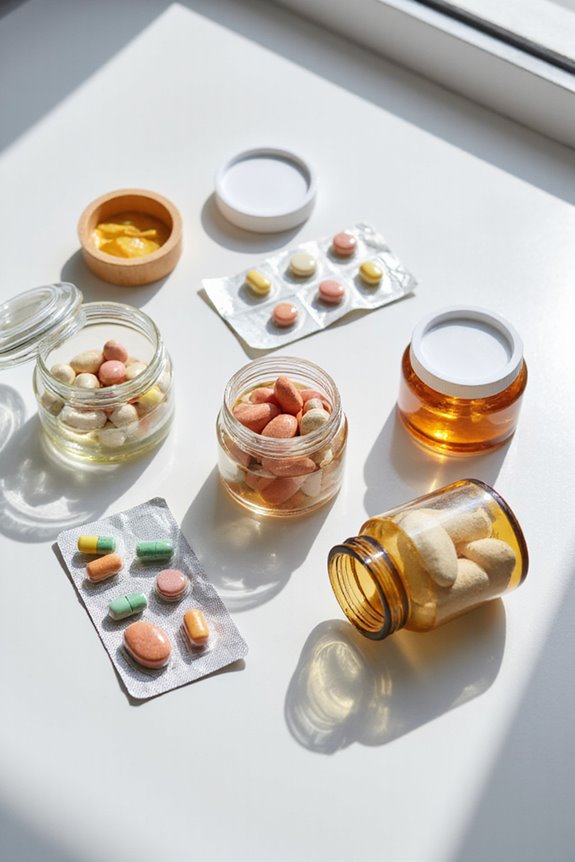
To store supplements effectively, we should keep them in a cool, dry place, ideally between 59°F and 77°F. Using airtight containers helps to maintain potency by limiting air and moisture exposure. We also need to protect them from light, so choosing amber or opaque containers is wise. Regular checks for expiration dates and following the FIFO method can help guarantee freshness. Isn’t it great to know that with the right practices, we can keep our supplements at their best? More useful tips await!
Key Takeaways
- Store supplements in a cool, dry environment with temperatures between 59°F and 77°F, avoiding heat and humidity.
- Use airtight containers made of glass or high-quality plastics to minimize air and moisture exposure.
- Protect from light exposure by using amber glass or opaque containers to preserve sensitive ingredients.
- Reseal containers tightly after each use to maintain effectiveness and prevent moisture ingress.
- Regularly inspect stock for expiration dates and use FIFO rotation methods to ensure product freshness.
Optimal Temperature and Humidity Conditions
You may be interested

When it comes to storing supplements, we find that the right temperature and humidity can make a significant difference in their effectiveness and shelf life. To keep our supplements in the best shape, we should aim for a storage temperature between 59°F and 77°F. Avoid letting them get too hot, as temperatures over 86°F can lead to oxidation, especially in sensitive items like omega-3s. Omega-3s are particularly prone to degradation, which is why purity and testing standards are essential to ensure their effectiveness.
As for humidity control, we want to keep levels between 35% and 65%, ideally around 40% to 50%. High humidity can cause moisture absorption, leading to clumping or spoilage. By choosing a stable, cool, and dry environment—like a bedroom—we can help maintain our supplements’ potency for longer.
Importance of Airtight Containers
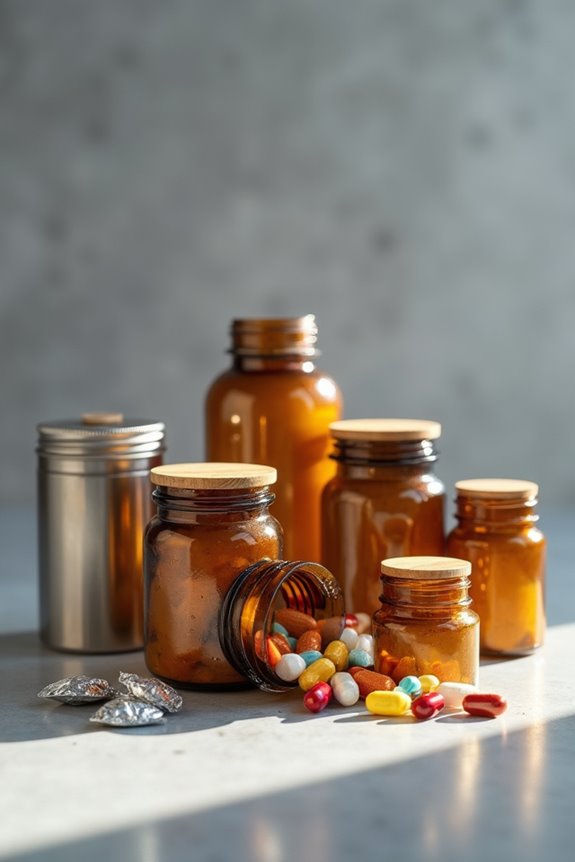
Airtight containers play an essential role in maintaining the quality of our supplements, especially since exposure to air can lead to faster degradation. By reducing air and moisture exposure, these containers help preserve potency and extend shelf life considerably.
Key benefits include:
- Container Materials: Glass and high-quality plastics provide excellent airtight seals.
- Sealing Mechanisms: Features like silicone gaskets and locking clamps enhance air-tightness.
- Protection: Airtight seals prevent moisture ingress and inhibit bacteria growth.
Moreover, they facilitate better organization, reducing clutter and risk of cross-contamination. When stored properly, we can feel confident that our supplements remain effective for longer periods. Always remember to check that the container is fully closed after every use for ideal protection! Furthermore, proper storage practices can significantly influence supplement effectiveness and shelf life, ensuring you receive the maximum benefits from your investment.
Recommended Products

Cabinets provide moisture and dust-free storage of valuable hygroscopic chemicals and materials with a patented airtight seal design.

EASY-TO-USE CONTROL PANEL AND PRESSURE INDICATOR: Perfect vacuum and seal with minimal effort using one-touch controls on this vacuum sealer machine. The intuitive control panel and pressure indicator ensure consistent results. For a quick seal, simply press the stop button to seal the bag and automatically open the chamber.

✔️ PREMIUM QUALITY: Blue Spirulina Powder by Food to Live is a premium quality fine powder, It is also Kosher superfood. Moreover, its free of trans-fat and cholesterol.
Protecting Supplements From Light Exposure
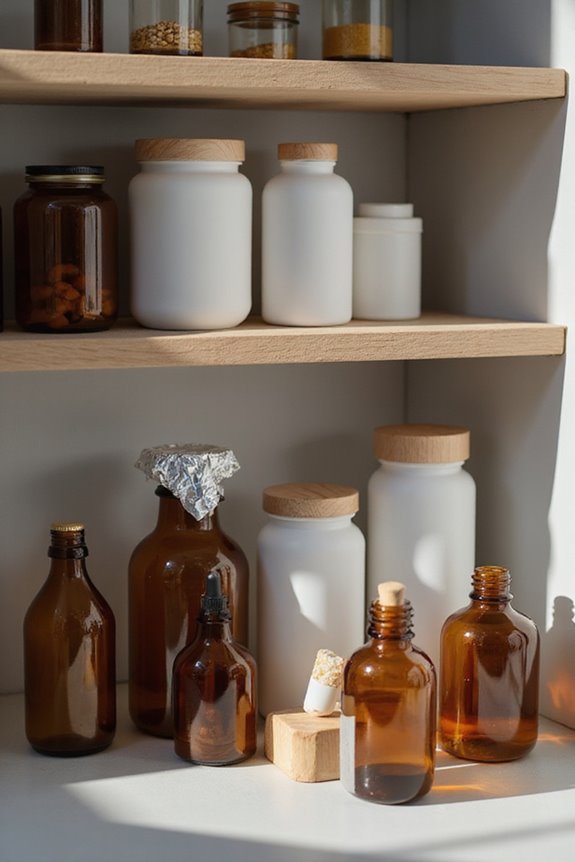
Protecting our supplements from light exposure is essential for ensuring they maintain their effectiveness and quality over time. Light degradation, particularly from ultraviolet (UV) and even visible light, can notably affect sensitive ingredients like vitamins A, C, and E. To counter these risks, we can choose effective packaging solutions.
- Amber or dark-colored glass bottles are great for blocking harmful light.
- Opaque or foil-lined containers provide complete light protection.
- Blister packs with aluminum foil are also excellent barriers.
When storing, we should keep supplements away from direct sunlight, avoiding windows and bright artificial lights. By utilizing these strategies, we enhance the longevity and potency of our supplements, ensuring they work the way they should. Additionally, molecular distillation of fish oil supplements is crucial for maintaining their purity and effectiveness, free from contaminants that light exposure could compromise.
Recommended Products

Capacity: 138 Wine bottles (750 ml) with 14 shelves, 2 Cooling Zones

3-Color LED Lighting in Cloud White, Deep Blue and Amber

Managing Heat and Moisture Levels
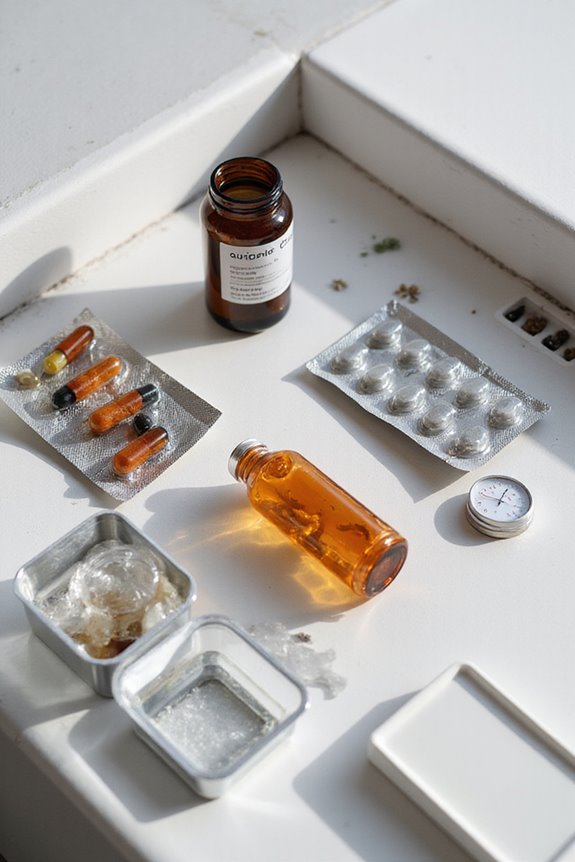
Managing heat and moisture levels is essential for keeping our supplements effective and stable. To maintain their potency, we should store supplements in a cool, dry place. Ideally, temperatures should range between 59°–77°F (15°–25°C). We must remember that heat sensitivity is a concern, as higher temperatures can lead to oxidation and spoilage—especially in oils like omega-3s. For moisture absorption, it’s best to keep relative humidity around 35% to 65%. When humidity exceeds 80%, supplements like Vitamin C can lose effectiveness. To minimize exposure, let’s reseal containers tightly after use and avoid storing our supplements in bathrooms or active kitchens. Additionally, consistent use of supplements may enhance effectiveness over time, so proper storage is critical. By following these guidelines, we can help guarantee our supplements remain stable and effective for longer.
Recommended Products

Allows manual start and stop to control air removal; helps seal delicate foods without crushing them

Perfect for Road Trip---Take the cargo box to the park, the beach, the sports field, or any place you need to store. Works on all vehicles with rack, suitable for cars, vans, SUVs, etc. Sleek aerodynamic design to reduce drag and has less noise.
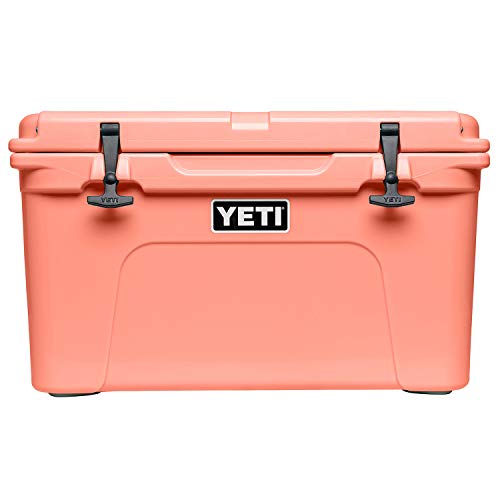
The YETI Tundra 45 combines versatility with durability with a capacity of up to 26 cans with a recommended 2:1 ice-to-contents ratio
Special Storage Considerations
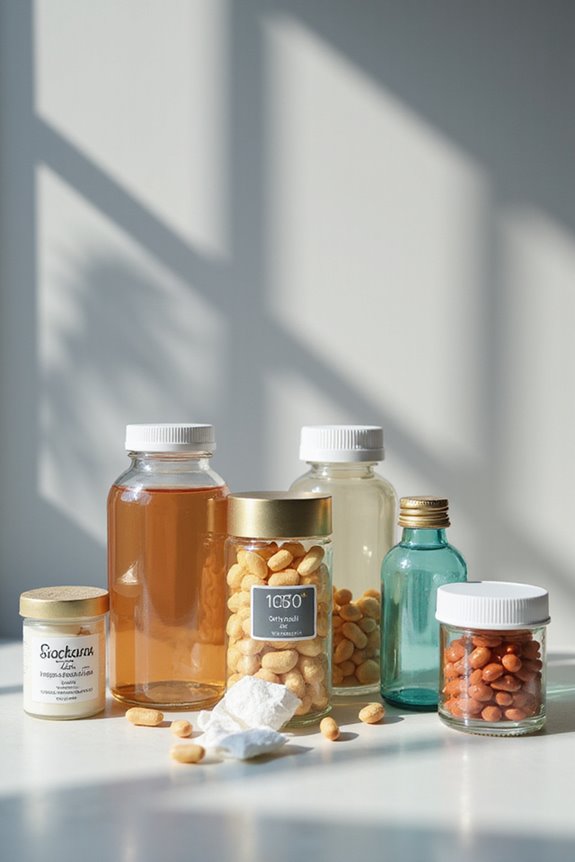
When we think about storing our supplements beyond just temperature and humidity, light exposure emerges as an important factor. Here’s what we should consider:
- Light Protection: Keep supplements in dark or opaque containers to block harmful light. This helps maintain their potency. Storing them in cabinets instead of on countertops is a smart move.
- Original Packaging: Always store supplements in their original containers. These often contain desiccants that protect against moisture. Tightly reseal after opening.
- Air Quality: Oxygen can degrade our supplements. Using airtight containers and vacuum seal bags for powders can extend their storage duration.
- Supplement Organization: Consider labeling systems to avoid mix-ups, but it’s best not to repackage supplements. Additionally, certain probiotics like shelf-stable formulations can provide convenience and longer shelf life, making them easier to store without strict refrigeration requirements.
Recommended Products

𝗗𝘂𝗿𝗮𝗯𝗶𝗹𝗶𝘁𝘆, 𝗮𝗲𝘀𝘁𝗵𝗲𝘁𝗶𝗰 𝗮𝗻𝗱 𝗦𝗺𝗲𝗹𝗹 𝗣𝗿𝗼𝗼𝗳: Our Food Storage Containers are not only designed to protect your precious contents but they’re also designed to withstand breaks and drops. These screw top jars are great for travel, sampling, and storage. The airtight container plastic lid creates a smell-proof barrier, making it perfect for storing seasonings and other odorous goods.

𝗗𝘂𝗿𝗮𝗯𝗹𝗲, 𝗘𝗹𝗲𝗴𝗮𝗻𝘁, 𝗮𝗻𝗱 𝗔𝗶𝗿𝘁𝗶𝗴𝗵𝘁 𝗗𝗲𝘀𝗶𝗴𝗻: Crafted from thick ultraviolet glass and sealed with a BPA-free screw-top lid, these jars are built to last. Perfect for kitchen, pantry, or on-the-go use. The airtight seal helps preserve flavor and freshness
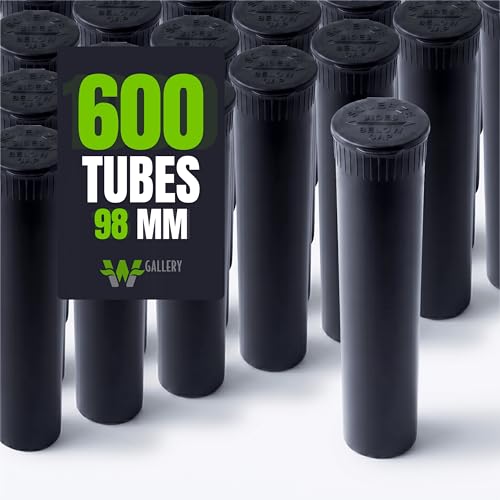
It is designed to keep edible, herbs, medication, spices, or concentrate storage. The container holds the contents fresh due to its Airtight, Moisture Resistant, and Odor Proof features.
Regular Inspections and Stock Rotation
Regular inspections of our supplement stock are essential for guaranteeing that what we have on hand remains safe and effective. By routinely checking the condition of our supplements, we can avoid expired or degraded products. This practice not only helps us maintain compliance with health standards but also allows us to catch any damaged or recalled items early.
Implementing effective stock rotation is equally important. Using methods like FIFO (First In, First Out) guarantees we prioritize older supplements, minimizing spoilage. We should label our products with arrival and expiration dates for easier tracking. By combining regular inspections with proper stock rotation methods, we maximize the freshness of our supplements while reducing waste. Regular attention leads to better efficiency and superior product quality.
Child Safety and Contaminant Prevention
Guaranteeing the safety of our supplements extends beyond regular inspections and proper stock rotation. To protect children, we should prioritize child-proof storage:
- Lock Away: Keep supplements in a locked cabinet or container, out of reach and sight.
- Secure Places: Avoid common areas like countertops or accessible drawers; consider a small safe for added security.
- Child-Resistant Packaging: Always store supplements in their original child-resistant containers and verify they’re tightly closed.
Additionally, caregiver education plays an essential role:
- Inform Visitors: Make certain babysitters and guests know about our storage practices.
- Poison Control: Share the Poison Control Center number (1-800-222-1222) for emergencies.
Recommended Products

SPORTS EQUIPMENT STORAGE: The universal storage cart is ideal for storing sports balls and other gym equipment

It is designed to keep edible, herbs, medication, spices, or concentrate storage. The container holds the contents fresh due to its Airtight, Child Resistant, Moisture Resistant, and Odor Proof features.

BPA Free and Food Grade Safe
Following Manufacturer Instructions
Following manufacturer instructions for storage is essential to keeping our supplements effective and safe over time. These guidelines are crafted from thorough stability testing to guarantee potency until expiry.
Here’s what we should keep in mind:
- Temperature Control: Most supplements need a cool, dry place, ideally below 25°C (77°F).
- Humidity and Light: Excess moisture can damage ingredients, while UV rays can degrade vitamins.
- Keep Packaging Intact: Always store in the original packaging and keep it tightly closed to minimize oxygen exposure.
- Expiration Dates: Respect the shelf life specified by manufacturers; using supplements post-expiry may lead to reduced potency or safety risks.
Frequently Asked Questions
Can I Store Supplements in the Fridge?
Sure, we can store certain supplements in the fridge! The benefits include protecting temperature-sensitive items and extending shelf life. But we must be cautious, as improper refrigeration may harm others. Always check the label first!
How Long Do Supplements Typically Last?
Did you know some supplements can last up to 15 years when stored right? While expiration dates vary, we find their shelf life typically ranges from 1 to 2 years, depending on type and conditions.
Is It Safe to Buy Bulk Supplements?
When considering bulk supplements, we need to weigh the benefits against potential risks. We’ll benefit from cost savings, but let’s prioritize quality by choosing reputable brands and following effective bulk buying tips for safety.
Can I Use Plastic Containers for Storage?
We can use plastic containers for storage, but let’s prioritize safety. Choosing BPA-free options and checking container types is crucial. Proper labeling can help guarantee our supplements remain potent and free from harmful chemicals.
What Signs Indicate Supplements Have Expired?
When we’re checking for expiration indicators, we should look for changes in color, texture, and smell. A reduced shelf life can mean supplements lose potency or effectiveness, so it’s essential to be vigilant.