As an Amazon Associate, we earn from qualifying purchases. Some links on this site are affiliate links at no extra cost to you. Our recommendations are based on thorough research and editorial judgment.


Do Fitness Trackers Work For Cycling?

Fitness trackers can be useful for cycling, but their accuracy varies. Chest straps like the Polar H10 provide reliable heart rate readings. However, wrist-based monitors often struggle with movement, leading to inaccurate heart rate data. Calorie estimates can be off by 10% to 60%. While GPS tracks distance effectively, step counts may not reflect cycling accurately. Sensor placement matters too. By knowing these factors, we can better understand our cycling performance. Let’s explore more specifics.
Key Takeaways
- Chest strap monitors, like the Polar H10, provide high accuracy for heart rate during cycling compared to wrist-based monitors.
- Fitness trackers commonly misestimate calories burned during cycling, with inaccuracies ranging from 10% to 60%.
- GPS distance tracking is reliable for recording cycling distances but can drain battery life on phones.
- Algorithms designed for walking may not accurately capture cycling motion, limiting the effectiveness of wrist-based trackers.
- Combining sensors, such as ankle or pedal-based devices, can enhance data accuracy in cycling performance metrics.
Accuracy of Heart Rate Monitoring During Cycling
You may be interested

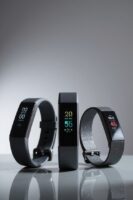

When we’re cycling, understanding how accurately our heart rate is being measured can really enhance our experience and performance. Chest strap monitors, like the Polar H10, are known for their sensor accuracy. They use electrodes to detect our heart’s electrical activity, providing reliable data even during intense rides. These straps minimize motion artifacts thanks to their secure fit around the rib cage. In contrast, wrist-based monitors can struggle, often misreporting our heart rates due to movement and vibration. For example, studies indicate that wrist sensors may lag, sometimes reflecting half our actual rates. By choosing a chest strap for our rides, we’re likely to enjoy more consistent and precise heart rate readings, essential for effective training and pacing. Additionally, GPS accuracy plays a crucial role in tracking performance metrics and ensuring comprehensive data collection during cycling sessions.
Recommended Products

3G Cardio, an Arizona-based company with a combined 50 years of experience in the fitness industry, provides commercial-level quality and premium value. We offer an unmatched lifetime frame warranty, 7-year parts, and 1-year in-home labor (scroll down for commercial warranty), and you are only a phone call away from 5-star customer service 9-5 weekdays PST.

RESISTANCE: Smooth and unlimited air resistance provides low resistance at slow speeds and high resistance at fast speeds – completely user controlled and great for anything from rehab to high intensity interval training

Bluetooth enabled Heart Rate Monitor with LCD screen
Validity of Calorie and Energy Expenditure Measurements
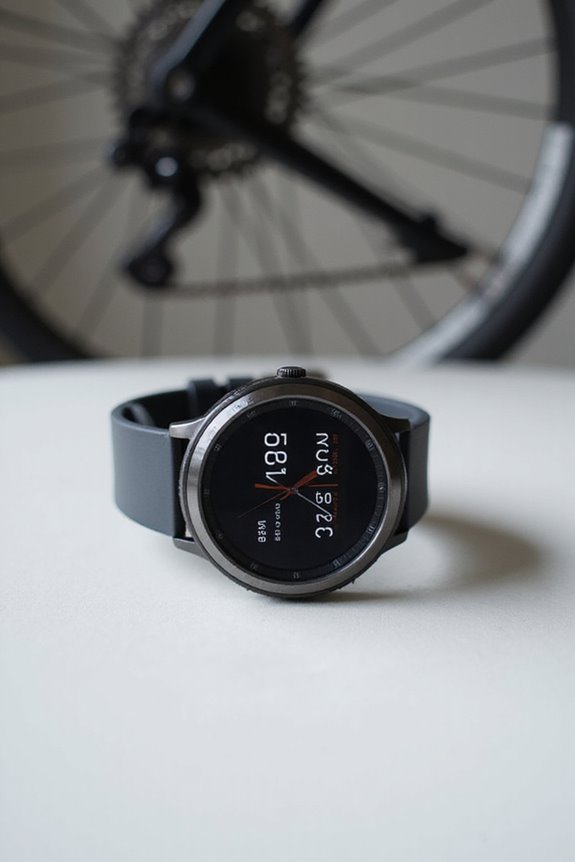
Understanding the validity of calorie and energy expenditure measurements can help us make more informed decisions about our cycling routines.
Fitness trackers often struggle with calorie estimation accuracy. Their calculations might be off by 10% to 60%, especially when based only on basic metrics like time, distance, and weight. This can lead to inflated energy expenditure numbers.
- Energy expenditure variability due to terrain, cycling style, and conditions is rarely considered.
- Heart rate-based calculations do enhance accuracy but can still be misleading. Additionally, using continuous heart rate monitoring can provide better insights into your workout intensity.
Recommended Products
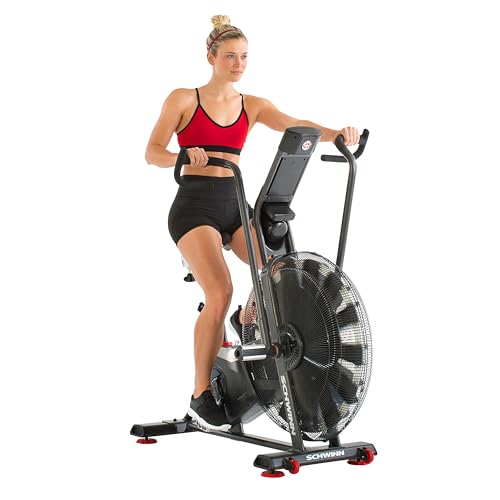
Progressive wind resistance for infinite levels of challenge
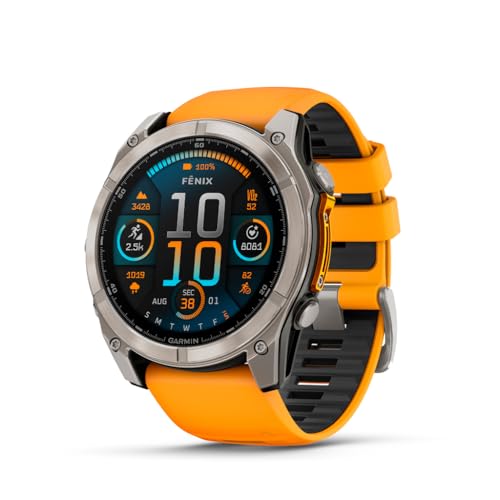
Advanced multisport GPS smartwatch for athletes/adventurers features a big, bright 1.4” AMOLED display with scratch-resistant sapphire lens, durable titanium bezel and a built-in LED flashlight for after- dark visibility

Built to Endure, Designed for Performance: The Garmin fenix 8 AMOLED Sapphire Multisport GPS Smartwatch combines rugged durability with sophisticated technology. Dive-rated and tested to U.S. military standards, it features a 1.4” AMOLED display with a scratch-resistant lens and titanium bezel. Its leakproof buttons and robust construction ensure reliability under extreme conditions, making it ideal for serious athletes and adventurers who demand both durability and high performance.
Relevance of Step Count and Distance Tracking

Although we often think of step counts as a standard metric for tracking fitness, it doesn’t translate well to our cycling routines. The step count feature, designed for walking or running, simply doesn’t capture the essence of pedaling. With moderate accuracy—like Garmin’s 82.58%—this may misrepresent our actual cycling activity.
On the other hand, distance tracking shines in cycling. Leveraging GPS, it reliably records how far we’ve ridden, especially outdoors. This becomes vital for evaluating our workouts and tracking progress. Instead of focusing on step counts, we should prioritize distance tracking, which provides a clearer picture of our cycling efforts. This way, we can enjoy the ride while effectively monitoring our performance. Additionally, most fitness trackers maintain an IP68 water resistance rating, making them suitable for use in various weather conditions during our cycling adventures.
Recommended Products

THIS BUNDLE CONTAINS: 1 Garmin Approach S70 Golf Smartwatch | Full-Color CourseView Maps | High-Quality AMOLED Display | Advanced Shot Execution & Putt Alignment | Immersive Golfing Experience + 1 Garmin Approach CT10 Full Kit, Club Tracking System (14 Sensors) + 1 Signature Series Watch Stand with Charging Cable + 1 Signature Series 5000mAh Portable Power Bank with Wall Charger and Car Plug Adapter
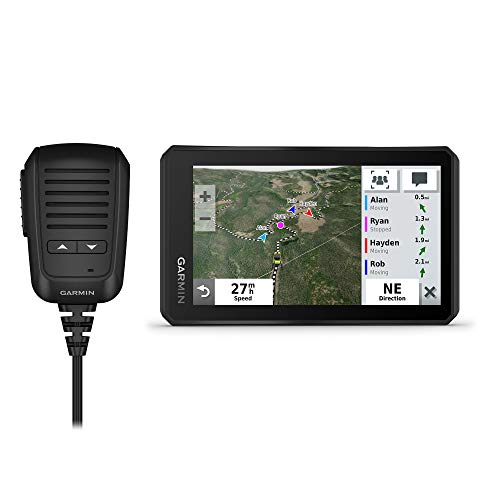
Rugged, weather-resistant (IPX7) powersport navigator with 5.5” glove-friendly and ultrabright touchscreen for off-road adventures
![Apple Watch Ultra 2 [GPS + Cellular 49mm] Smartwatch with Rugged Titanium Case & Indigo Alpine Loop Large. Fitness Tracker, Precision GPS, Action Button, Extra-Long Battery Life](https://m.media-amazon.com/images/I/51QbG7GtQcL._SL500_.jpg)
WHY APPLE WATCH ULTRA 2 — Meet the ultimate sports and adventure watch. Advanced features for runners, cyclists, swimmers, hikers, divers, and more. Rugged titanium case, now available in satin black. Superbright Always-On Retina display. Incredibly accurate precision dual-frequency GPS.* Powerful health, safety, and connectivity features.* And up to 36 hours of battery life for normal use and 72 hours in Low Power Mode.*
Influence of Tracker Algorithms and Sensor Placement

The accuracy of our cycling data is heavily influenced by the algorithms running within our fitness trackers and where we place these devices. Many algorithms show algorithm bias since they’re mainly trained on walking or running data, which can lead to false positives or undercounting cycling metrics. For instance, cycling motion differs considerably from walking, making accurate detection a challenge.
Sensor accuracy is also essential; wrist-based trackers might struggle due to less pronounced arm movements, while ankle or pedal-based devices capture better leg motion. Combining various sensors—like wrist and chest—can offer a fuller picture. However, relying heavily on wrist sensors might limit our tracker’s ability to provide precise cycling-specific metrics. Additionally, high-precision health monitoring features can help improve data accuracy as they cater to various activities, including cycling.
Limitations and Considerations for Cyclists
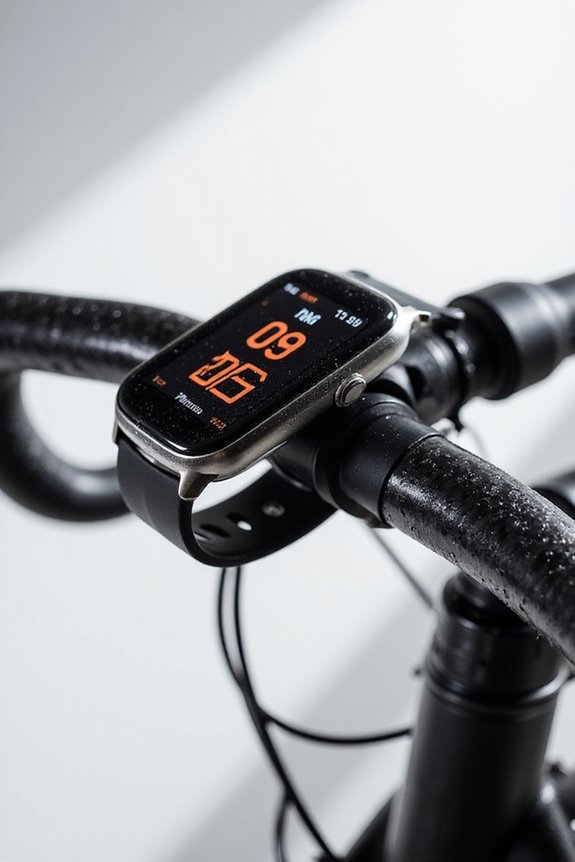
When we hit the road or trails on our bikes, it’s crucial to be aware of the limitations and considerations that come with using fitness trackers during cycling.
- Wrist Positioning: Many trackers can struggle with accuracy due to how we grip the handlebars, which affects sensor contact.
- Sensor Comfort: We must guarantee proper band fit; too tight can restrict blood flow while too loose causes inconsistent readings.
- Battery Life: Relying on our phones for GPS can drain their battery, making us dependent.
- Connectivity Issues: Tracking data may be lost with variable signal conditions.
- Data Aggregation: Some cycling metrics aren’t included in total health stats, limiting our insight into performance.
Understanding these factors helps us make better choices when monitoring our cycling activities. Additionally, many budget fitness trackers offer battery life of 5-7 days under normal usage, which can be a significant advantage for long rides.
Recommended Products
![Apple Watch Series 9 [GPS + Cellular 45mm] Smartwatch with Graphite Stainless Steel Case with Graphite Milanese Loop. Fitness Tracker, ECG Apps, Always-On Retina Display](https://m.media-amazon.com/images/I/51IpPJwRTqL._SL500_.jpg)
CARBON NEUTRAL — An aluminum Apple Watch Series 9 paired with the latest Sport Loop is carbon neutral. Learn more about Apple’s commitment to the environment at apple.com/2030.

PROFESSIONAL DIVE COMPANION - To satisfy diving enthusiasts for more fun exploration, SUUNTO Ocean provides a variety of optional dive modes, including freediving, snorkeling, mermaid diving, single and multigas diving with air & nitrox support. Compatible with the advanced Bühlmann 16 GF algorithm and wireless tank pod, the dive computer allows you to follow multiple tank pressure and gas consumption on watch in time, with mandatory alarms to ensure safety while diving.
![Apple Watch Series 8 [GPS + Cellular 45mm] Smart Watch w/Silver Stainless Steel Case with White Sport Band - M/L. Fitness Tracker, Blood Oxygen & ECG Apps, Always-On Retina Display, Water Resistant](https://m.media-amazon.com/images/I/31xxEYRx4aL._SL500_.jpg)
WHY APPLE WATCH SERIES 8 — Your essential companion for a healthy life is now even more powerful. Advanced sensors provide insights to help you better understand your health. New safety features can get you help when you need it. The bright, Always-On Retina display is easy to read, even when your wrist is down.
Comparative Brand Accuracy and Performance Insights
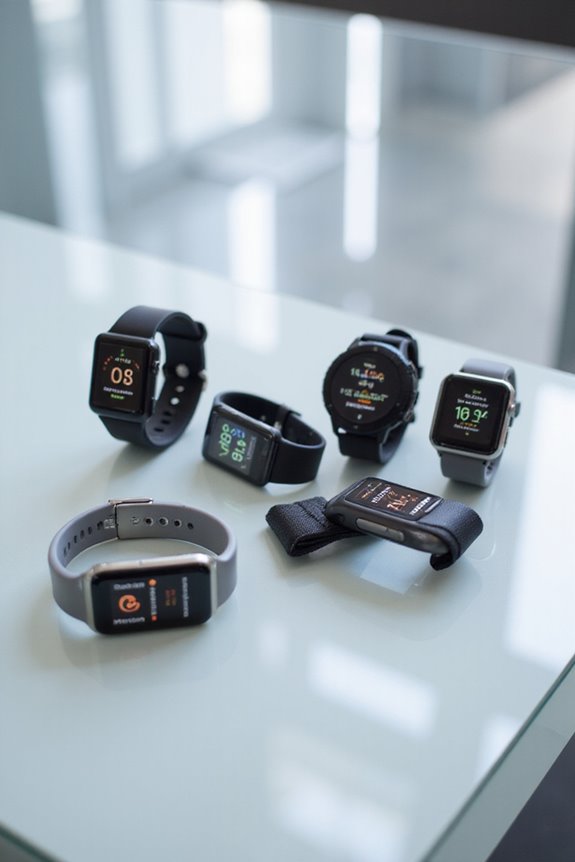
Diving into the world of fitness trackers, we find that different brands offer a wide range of accuracy and performance tailored specifically for cycling.
Garmin vs. Apple
- Garmin watches, like the Epix 2 and Forerunner 955 Solar, excel in cycling metrics with GPS accuracy, long battery life, and support for power meters.
- Apple Watch Series 10 integrates well with power meters but lacks built-in navigation and has a shorter battery life during long rides.
While Garmin’s dedicated cycling features provide more extensive data, Apple offers solid metrics but requires third-party apps for some cycling insights. Ultimately, if we prioritize cycling performance and data accuracy, Garmin often holds the edge over Apple.
Recommended Products

Bundle Includes: Garmin Descent Mk2i, Watch-Style Dive Computer with Air Integration, Multisport Training/Smart Features, Titanium Carbon Gray DLC with Black Band + USB3.0 to type-c female adapter + USB Wall Charger White Cube + Microfiber Cleaning Cloth

Built to Endure, Designed for Performance: The Garmin fenix 8 AMOLED Sapphire Multisport GPS Smartwatch combines rugged durability with sophisticated technology. Dive-rated and tested to U.S. military standards, it features a 1.4” AMOLED display with a scratch-resistant lens and titanium bezel. Its leakproof buttons and robust construction ensure reliability under extreme conditions, making it ideal for serious athletes and adventurers who demand both durability and high performance.

Built to Endure, Designed for Performance: The Garmin fenix 8 AMOLED Sapphire Multisport GPS Smartwatch combines rugged durability with sophisticated technology. Dive-rated and tested to U.S. military standards, it features a 1.4” AMOLED display with a scratch-resistant lens and titanium bezel. Its leakproof buttons and robust construction ensure reliability under extreme conditions, making it ideal for serious athletes and adventurers who demand both durability and high performance.
Frequently Asked Questions
Can Fitness Trackers Monitor Cycling Performance in Indoor Settings Effectively?
We find that fitness trackers can struggle with indoor cycling performance due to tracker limitations like inaccurate heart rate readings and lack of GPS. For reliable metrics, it’s often better to use dedicated devices like chest straps.
How Do Weather Conditions Affect Fitness Tracker Accuracy While Cycling?
Ever wondered how the weather impacts our fitness trackers? Temperature effects and humidity impact our heart rate readings, making accuracy while cycling challenging. We’ve got to be mindful of these conditions on our rides.
Do Fitness Trackers Provide Real-Time Feedback During Cycling Activities?
We’ve found that fitness trackers can indeed offer real-time metrics during cycling, enhancing our user experience. Metrics like heart rate, speed, and distance help us stay engaged and informed throughout our rides.
Is It Necessary to Calibrate Fitness Trackers for Cycling-Specific Metrics?
Isn’t it interesting how calibration methods can transform cycling metrics? We find that without proper calibration, our fitness trackers may offer less reliable data, making accuracy in cycling performance essential for effective training and progress measurement.
How Can Cyclists Improve the Accuracy of Their Fitness Tracker Readings?
To improve our fitness tracker readings, we should guarantee GPS accuracy by minimizing obstructions and regularly syncing data. A snug device fit is essential for accurate heart rate measurements during our cycling sessions.