As an Amazon Associate, we earn from qualifying purchases. Some links on this site are affiliate links at no extra cost to you. Our recommendations are based on thorough research and editorial judgment.

Are There Devices for Home Ph Testing?

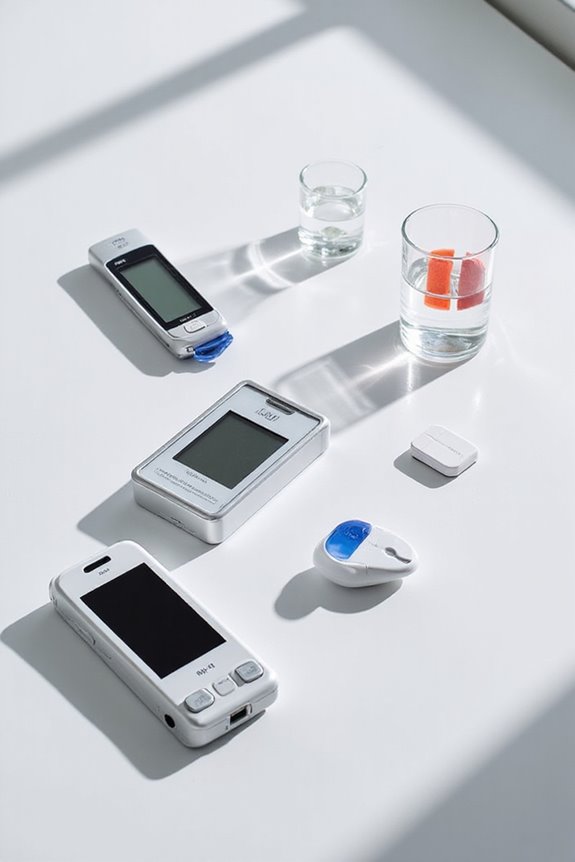
Yes, there are several devices for home pH testing! We can choose from portable pocket testers for quick measurements to more advanced benchtop meters for high accuracy. Common features include automatic temperature compensation, user-friendly displays, and waterproof designs. These devices are perfect for checking water quality, soil health, and food safety. Prices vary, but many options are affordable. By exploring these devices further, we can uncover the best fit for our pH testing needs.
Key Takeaways
- Home pH testing devices include pocket testers, handheld meters, and benchtop meters catering to different accuracy and usage needs.
- Pocket pH testers are affordable and portable, ideal for basic water testing in aquariums or pools.
- Handheld pH meters offer better accuracy and measurement versatility, suitable for various environments.
- Benchtop pH meters provide high precision, making them perfect for home labs and serious enthusiasts.
- Regular calibration and maintenance ensure accurate results from any home pH testing device.
Types of Ph Testing Devices for Home Use
You may be interested


When it comes to home pH testing devices, we have several types designed to suit different needs and preferences.
- Pocket pH Testers: Affordable and ultra-portable, these offer quick readings for basic tasks like aquarium or pool testing, but pH testing accuracy may be limited.
- Handheld/Portable pH Meters: More rugged and versatile, they work well in tough environments, providing better accuracy and multiple measurements, such as conductivity and TDS.
- Benchtop pH Meters: These stationary devices deliver the highest level of precision, ideal for detailed tasks at home labs or serious enthusiasts. Additionally, incorporating high-quality measurement tools can enhance your home testing setup for more reliable results.
Features of Common Home Ph Meters
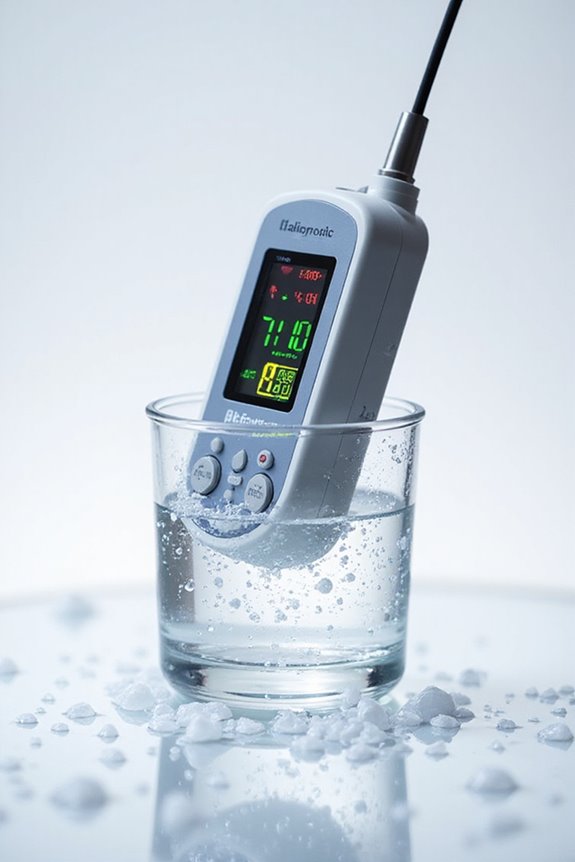
While there are various home pH meters on the market, understanding their features can help us choose the right one for our needs. Key features to evaluate include:
- pH Meter Accuracy: Ranges from ±0.02 for professional models to ±0.2 for simpler devices, depending on electrode quality.
- Temperature Compensation: Automatic temperature compensation (ATC) adjusts readings based on sample temperature, enhancing reliability.
- Calibration Options: Many meters offer automatic multi-point calibration with standard buffers, ensuring accurate results.
- Design Durability: Waterproof construction and portable designs make some meters ideal for home or field use.
- User-Friendly Features: Look for large LCD displays and data hold functions for easy reading and recording. Additionally, consider device durability and reliability to ensure long-term performance of your pH meter.
Applications for Home Ph Testing Devices
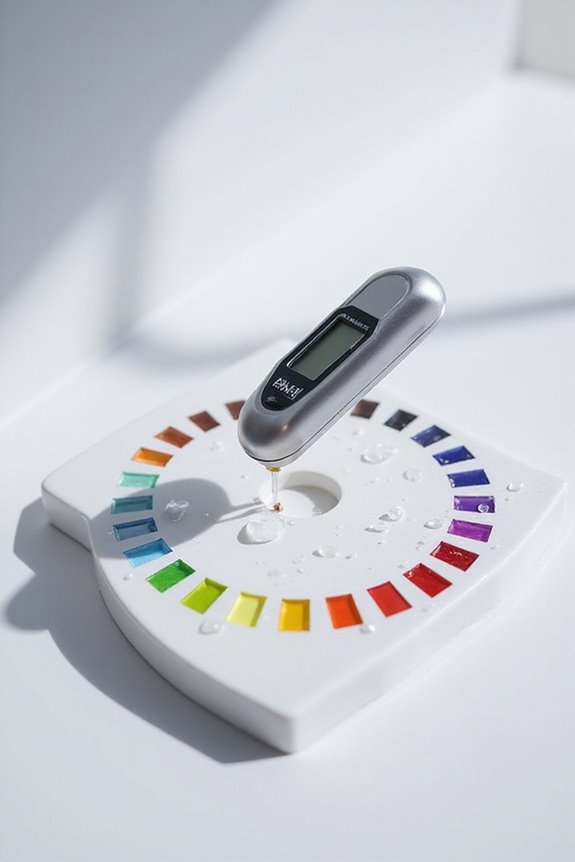
Home pH testing devices offer a range of applications that can benefit various aspects of our daily lives.
Water Quality Monitoring
- We can verify our municipal water is safe and meets health standards.
- For backyard pools, keeping pH balanced helps protect swimmers and equipment.
Soil Health
- In gardening, testing soil pH lets us optimize nutrient availability for plants.
- With rapid results, we can make instant adjustments to prevent nutrient lockout.
Food Safety
- During fermentation, pH meters help us check acidity in homemade products.
- Monitoring pH in water or pastes verifies safe storage and processing.
Home pH testing devices empower us to improve our environments, from maintaining clean water to enhancing our gardens. The versatility of these tools is truly valuable, demonstrating similar advanced health monitoring techniques used in fitness devices for ensuring overall well-being.
Popular Device Examples and Brands
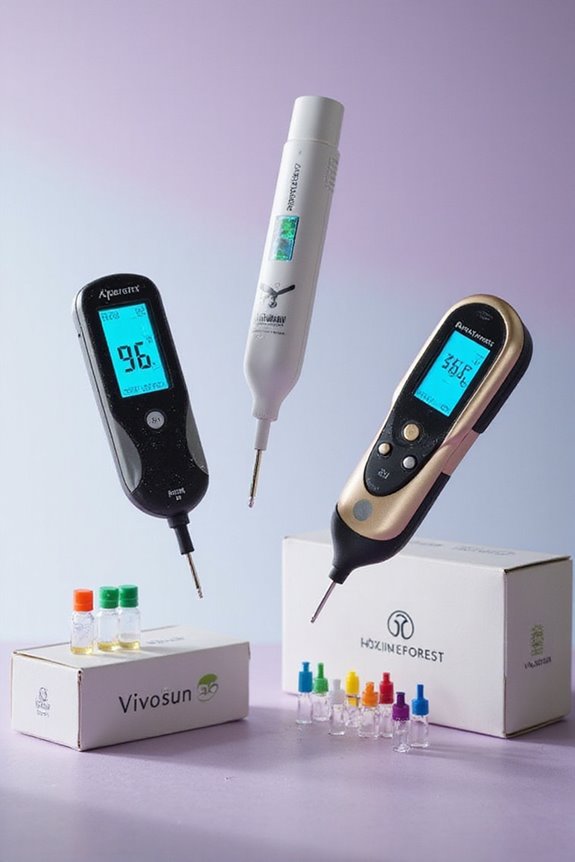
Choosing the right pH testing device can greatly enhance our ability to monitor and adjust various aspects of our environments. There are some excellent options for home use:
- YINMIK Digital pH Tester: No batteries needed, lightweight, and includes a moisture meter.
- Bluelab Soil pH Meter: Highly accurate, ideal for both professional and home settings, with a replaceable probe.
- Apera PH60 Pocket Tester: Aimed at hydroponics, celebrated for reliability and ease of use.
- Milwaukee pH Testers: Range of entry-level to advanced options, trusted by users for their durability.
In device comparisons and user reviews, models like the Apera PH60 gain acclaim for consistency, while the YINMIK is favored for affordability. Each brand offers unique advantages suited to our needs. Additionally, understanding the importance of accurate measurement capabilities in pH testing devices can significantly impact the quality of our monitoring efforts.
Sensor Types Commonly Incorporated in Home Devices
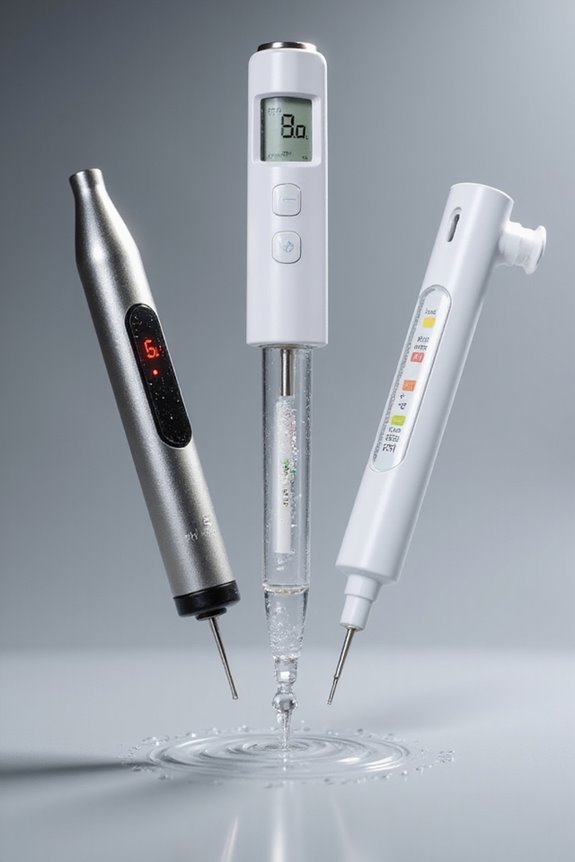
When we’re exploring sensor types commonly found in home pH testing devices, it’s clear that various designs cater to different needs.
- Combination pH Sensors are popular for their simplicity, combining a measurement and reference electrode into one probe. They’re great for monitoring pools and household water.
- Differential pH Sensors offer increased sensor accuracy with an additional grounding electrode, making them ideal for tougher conditions.
- Micro and Spear Tip pH Sensors feature sharp tips for direct measurements in solid or semi-solid materials, perfect for gardening enthusiasts.
- Lab-Grade and Industrial Process Sensors provide exceptional durability and can be overkill for casual home use, but their robustness is appealing for serious projects. Moreover, with advanced health monitoring features available in devices like the Amazfit Band 5, accuracy in measurement is becoming increasingly important for personal fitness and home projects alike.
Considerations for Selecting Home Ph Test Devices
Selecting the right pH testing device for our needs can make a big difference in how effectively we monitor our environments. Here are key considerations that can help us choose wisely:
- Accuracy and Resolution: Look for meters with an accuracy of ±0.01 pH units. This is particularly important if we’re checking cottage or acidified foods.
- Calibration: Devices with automated calibration are user-friendly. Regular calibration guarantees accurate readings.
- pH Range: Think about what we’re testing. A range from 2 to 12 pH suits most home applications.
- Probe Quality: Opt for high-quality probes, as they improve measurement reliability.
- User Experience: Check user reviews for insights on battery life, display readability, and ease of use. These factors greatly enhance our testing experience.
Benefits of Using a Ph Meter at Home
Using a pH meter at home can transform how we manage our environments, from gardens to aquariums. Let’s explore the pH meter advantages together:
- Accuracy: Digital meters offer reliable readings, minimizing errors from color interpretation and human bias.
- Convenience: Portable and battery-operated options make home testing easy, whether indoors or outdoors.
- Efficiency: Instant digital readouts mean no guesswork, while features like automatic calibration simplify usage.
- Cost-Effectiveness: Investing in a pH meter may save money over time by reducing the need for frequent testing and reagent use.
- Versatility: They cater to various applications, from gardening and pools to aquarium monitoring and food preparation.
With a pH meter, we can enhance our home management practices and guarantee healthy environments.
Maintenance and Calibration of Ph Testing Devices
Maintaining accuracy in our pH readings is just as important as achieving those readings in the first place. To guarantee reliable results, we need to focus on proper electrode maintenance and follow calibration procedures closely. Here are some key aspects to reflect on:
- Calibration Frequency: Regular calibration is essential. It’s recommended to calibrate our device before each use or daily, depending on the sensitivity needed.
- Use Standard Buffer Solutions: Always use fresh buffers, typically pH 4, 7, and 10, for accurate calibration.
- Electrode Cleaning: Rinse with distilled water to remove residues, and use special cleaning solutions if needed.
- Storage: Keep electrodes in a dedicated storage solution to maintain hydration.
Understanding Ph Measurements and Their Importance
Understanding how pH measurements work and their importance can enhance our ability to manage various environments, from our gardens to our drinking water. The significance of pH lies in its impact on chemical reactions, nutrient availability, and overall health of ecosystems. Accurate pH measurement guarantees that we can monitor these factors effectively.
To achieve measurement accuracy, we should understand that pH testing devices utilize electrodes that react to hydrogen ions. Factors such as temperature can affect results, so regular calibration is essential. By checking the pH of our water, soil, or even favorite foods, we can make informed choices that promote safety and quality.
Whether we’re optimizing our garden soil or guaranteeing clean water, understanding pH helps us thrive.
Future Trends in Home Ph Testing Technology
As we look ahead, the future of home pH testing technology promises to transform how we interact with our environment. With AI advancements, devices will become smarter, interpreting complex data for better accuracy and predicting pH fluctuations. This means we’ll receive early warnings for water quality issues right at home.
Moreover, portable designs will make testing easier than ever. Imagine pocket-sized testers equipped with Bluetooth for seamless data sharing with our smartphones. Devices will even feature multi-analyte detection, evaluating not just pH but also contaminants like heavy metals.
Enhanced sensors will use eco-friendly materials and self-cleaning properties, reducing maintenance. With these exciting innovations, maintaining water quality will become a simple, efficient process for everyone to enjoy.
Frequently Asked Questions
Can Ph Testing Devices Measure Other Substances Besides Water?
Many of us use pH testing devices not just for water, but to measure soil acidity or various liquid samples. These tools provide valuable insights into a variety of substances for better environmental management.
How Often Should I Calibrate My Home Ph Meter?
While we might think infrequent calibration suffices, we need to prioritize our meter accuracy. For home use, calibrating annually is fine, but more frequent checking can guarantee our meter accuracy remains reliable for our measurements.
What Is the Lifespan of a Ph Sensor?
The lifespan of a pH sensor varies based on maintenance and environmental factors. By prioritizing sensor maintenance and understanding these lifespan factors, we can effectively extend our sensors’ longevity and guarantee accurate measurements over time.
Are There Ph Meters Suitable for Testing Food Quality?
Yes, there are pH meters specifically designed for food quality testing. They guarantee food safety and provide quality assurance through accurate measurements, specialized electrodes, and features that simplify calibration and maintenance for reliable, efficient use in food environments.
Can Extreme Temperatures Affect Ph Readings?
Extreme temperatures definitely influence pH readings. We’ve learned that calibration’s importance can’t be overstated—if we don’t consider temperature effects, our measurements might not be accurate, leading to potentially misleading results in various applications.