As an Amazon Associate, we earn from qualifying purchases. Some links on this site are affiliate links at no extra cost to you. Our recommendations are based on thorough research and editorial judgment.

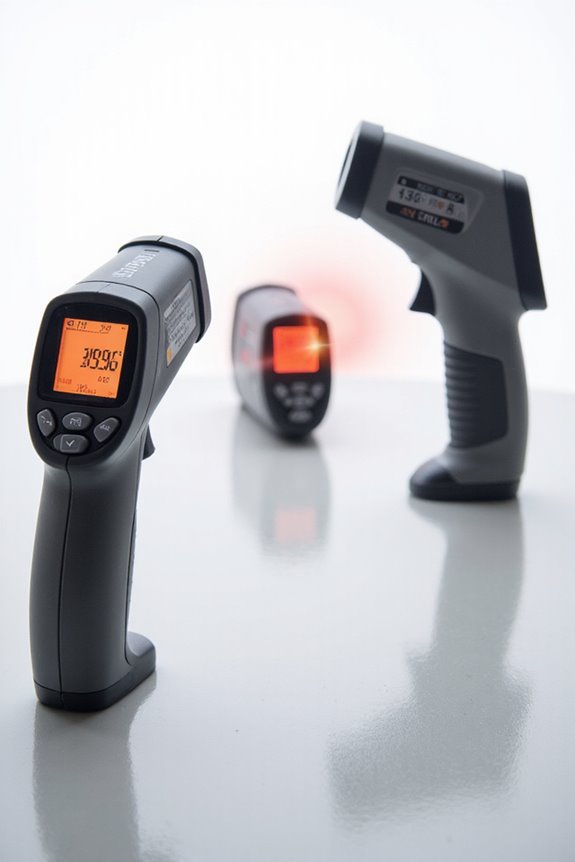
Are Infrared Thermometers Accurate?

Infrared thermometers offer quick and easy temperature checks, but their accuracy can vary considerably. Studies show that nearly half of their readings might fall outside the expected limits, which can lead to missed fevers or incorrect assessments. Factors like user technique and environmental conditions can greatly impact results. They’re great for mass screenings in places like airports and schools, but understanding their limitations is key. If you’re curious about their specific performance and best practices, there’s more to discover.
Key Takeaways
- Infrared thermometers vary in accuracy, with clinical biases ranging from -0.9 °C to +0.2 °C, making some models unreliable for fever detection.
- Nearly half of the readings may fall outside the claimed accuracy limits, highlighting significant variability between different models.
- Environmental conditions such as humidity and ambient temperature can distort infrared thermometer readings, impacting accuracy.
- Regular calibration and consistent measurement protocols are essential to ensure reliable and accurate temperature assessments.
- While they provide quick, non-contact readings, their sensitivity to minor fever levels is often limited, which affects their overall accuracy.
Understanding Infrared Thermometer Accuracy Standards
You may be interested


When we think about infrared thermometers, understanding their accuracy standards is essential for getting reliable readings. These standards, such as ISO 80601-2-56:2017 and ASTM E1965-98, outline measurement standards that guarantee we’re receiving consistent results. Compliance with these guidelines guarantees that manufacturers validate accuracy, considering factors like emissivity and measurement distance.
Here’s what to keep in mind:
- Accuracy validation needs regular calibration to stay compliant.
- Noise levels should be minimal, ideally below 0.1°C for dependable readings.
- Environmental conditions like humidity and ambient temperature affect performance.
- Regular calibration services can enhance the reliability of your thermometer.
Knowing these standards helps us choose thermometers that deliver consistent and accurate measurements, assuring peace of mind for personal or professional use.
Recommended Products

Field Of View: 30 : 1

Note: This product is for industrial use only. It is not for human use

PRECISE TEMPERATURE MEASUREMENT: Optical resolution (distance-to-spot) of 20:1 ensures accurate temperature readings from a distance
Clinical Evaluations of Infrared Thermometer Performance
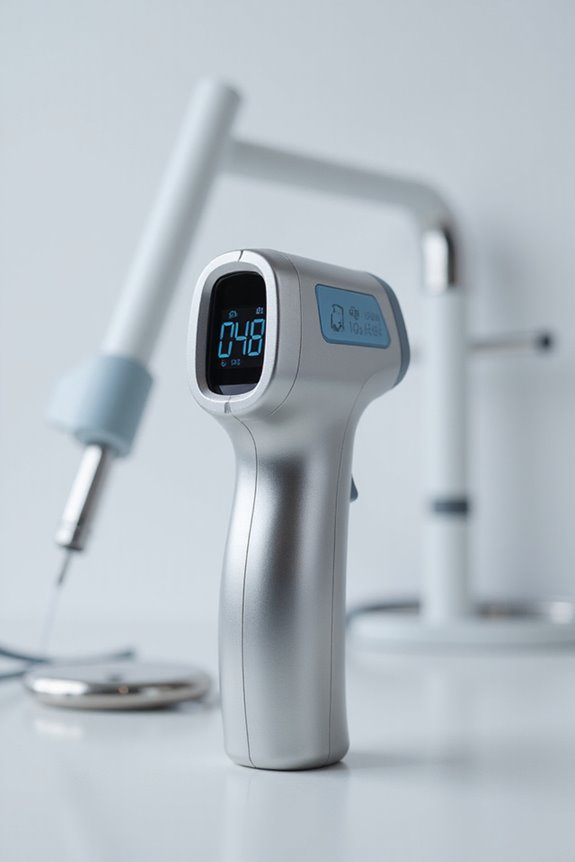
Evaluating infrared thermometers, especially non-contact infrared thermometers (NCITs), shows us a mixed bag of results. Clinical evaluations have revealed some concerning facts. For instance, accuracy can vary greatly among different models, with clinical bias ranging from -0.9 °C to +0.2 °C. Though some measurements align closely with the manufacturers’ claims, nearly half of the readings often fall outside accuracy limits. Additionally, a few models display high false-negative rates, leading to missed fever detections. Model variability plays an important role in performance; not all NCITs are reliable for fever screening. It’s essential for users to thoroughly evaluate these devices before use, as their inconsistent results may affect trust in their readings. Moreover, the importance of reliable communication in health monitoring devices emphasizes the need for accurate temperature measurements to ensure effective responses to potential health issues.
Measurement Variability and Its Impact

Understanding measurement variability in infrared thermometers—and how it can greatly influence user experiences—is essential for making informed choices.
- Model Differences: Different infrared thermometer models show significant variability. For instance, sensitivity at a 38 °C threshold varies from 0 to 0.69, indicating that some models can miss febrile readings.
- Intra-Model Variability: Even within the same model, 48% to 88% of readings may fall outside the advertised accuracy range.
- Temperature Effects: The difference between measured and reference temperatures often changes with actual temperature, impacting measurement reliability.
When considering an infrared thermometer, understanding these aspects of measurement variability can help us choose a model that best fits our needs, ensuring we have the most reliable readings possible in various situations. Additionally, accuracy and measurement precision are critical factors to evaluate for obtaining reliable results.
Environmental Influences on Accuracy
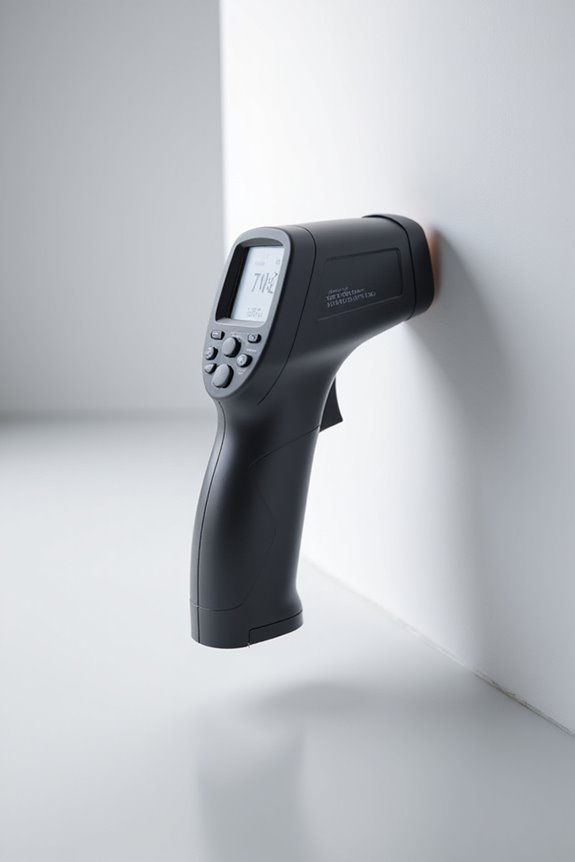
Environmental factors play a significant role in the accuracy of infrared thermometers.
- Ambient Temperature: Variations can distort measurements, especially outside the 36-37˚C range for body temperature, leading to higher error margins.
- Relative Humidity: High humidity can absorb and scatter infrared signals, causing errors of up to 0.1˚C in typical ranges. If not addressed, humidity can interact with surface materials, affecting readings.
- Airborne Particulates: Dust and smoke scatter signals, reducing accuracy, particularly when particulate density is high.
- Measurement Distance and Field of View: As the distance to the target increases, signal strength decreases. The field of view expands, potentially including unintended temperature variations from the background. Additionally, the accuracy of health monitoring devices like fitness trackers can also be influenced by environmental conditions, affecting their reliability in providing health metrics.
User Technique and Measurement Protocols
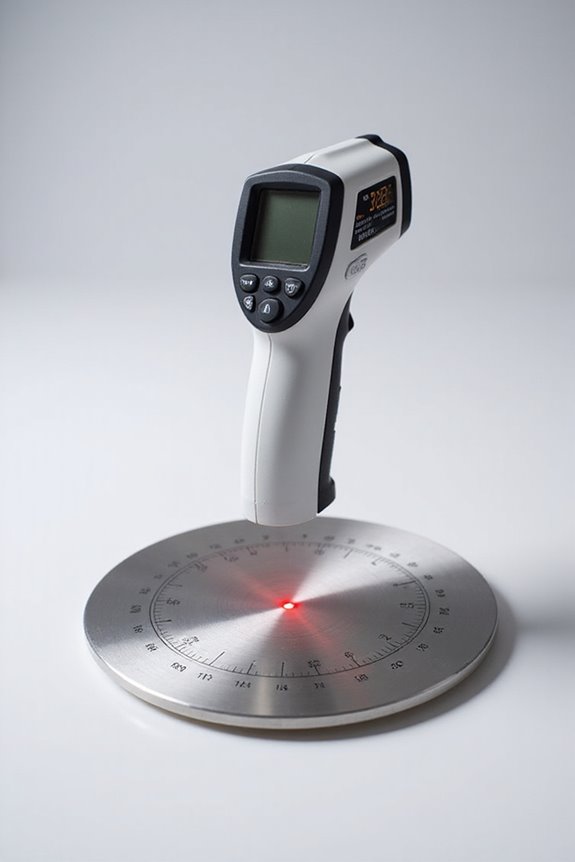
When we use infrared thermometers, our technique and measurement protocols can greatly influence the accuracy of our readings. Here are some key points to reflect on:
- Distance Matters: Keep the thermometer at the recommended distance, ensuring the measurement spot is equal to or smaller than the target area.
- Use the Laser Correctly: Treat the laser as a guide for the center, but remember it doesn’t define the entire measurement area.
- Cleanliness Counts: Maintain a clear line of sight and clean lens for accurate results.
- Consistent Protocols: Follow recommended measurement distances and take multiple readings to improve reliability. Additionally, understanding battery life is crucial, as some devices may require frequent charging, which can affect your measurement routine.
Recommended Products

【400x300 Sensor】:Focal length 25mm.It equipped with 12um 400x300 Sensor high-definition detector,which can achieve 2500m ultra-far night vision.Visual distance is 500~3500m.Digital zoom 2x,4x,8x /1.0~8x continous

TG54-2 Measures Temperatures ranging from -30°C to 850°C (-22°F to 1562°F) from safe distance using infrared technology with a 20:1 laser spot ratio

RUGGED DUST AND WATERPROOF PROTECTION: Brave the toughest job sites with a meter built to survive. This IP65-rated powerhouse is fully waterproof and dustproof, featuring a 3-meter drop-proof housing that laughs at accidental falls and heavy rain.
Comparison With Other Thermometer Types
While we often turn to infrared thermometers for quick temperature readings, their accuracy can vary considerably compared to other types. Here’s a breakdown of some key differences:
- Measurement Techniques: Infrared thermometers measure surface temperatures, which can be affected by sweat or ambient conditions. In contrast, probe thermometers provide internal readings, seen as more accurate for knowing food safety temperatures.
- Accuracy Factors: At lower temperatures, non-contact infrared thermometers (NCITs) do fairly well, but their precision drops at higher readings, which can be an issue for detecting fevers.
- Practical Considerations: Infrared devices allow for non-contact use, minimizing cross-contamination risks. However, probe thermometers often offer more reliable results for core temperature assessments.
Understanding these nuances helps us choose the right thermometer for our needs.
Recommended Products


For calibrating non-contact infrared thermometers and thermal imagers up to 932 degree F (500 degree C)

Easy to use, already made fresh pH buffer for calibration
The Importance of Calibration and Quality Control
Calibration plays a pivotal role in guaranteeing that infrared thermometers provide accurate readings. By implementing robust calibration procedures, we can confidently measure temperature without second guessing the results. Here are a few key points on the importance of calibration and quality assurance:
- Regular Calibration: It’s essential to calibrate thermometers routinely, as sensors can drift over time.
- Controlled Environments: Calibration in stable lab settings yields the best accuracy, reducing measurement uncertainty.
- Emissivity Settings: Properly configuring emissivity during calibration minimizes errors.
- Quality Control Programs: These programs help maintain ongoing precision, particularly in fields like food safety.
Practical Applications of Infrared Thermometers
Practical applications of infrared thermometers are broad and incredibly useful for various industries.
Industrial Applications:
- Detect overheating in machinery, which reduces failure risks.
- Measure surface temperatures of molten metals to guarantee quality and safety.
- Monitor boiler and furnace temperatures for efficient operations.
Food Safety:
- Verify that cooking surfaces reach target temperatures for proper food prep.
- Measure temperatures of food items swiftly to meet safety standards.
- Perform temperature audits in cold storage without opening doors.
Recommended Products

Manage data, capture multiple measurements and organize it by asset with Fluke Connect

Model E6-XT: Handheld IR camera measures temperatures from -20°C to 550°C (-4°F to 1022°F)
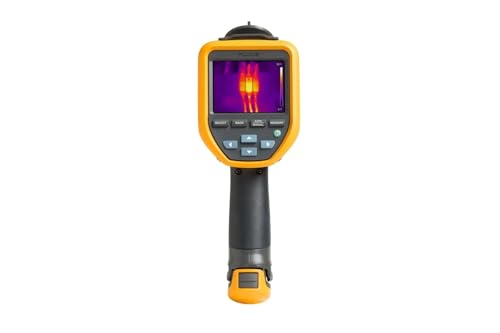
Fluke IR-Fusion - Simply slide your finger across the screen to adjust the level of infrared that you need.
Limitations in Detecting Low-Grade Fevers
When it comes to detecting low-grade fevers, infrared thermometers can sometimes fall short of expectations. We face sensitivity challenges particularly as temperature thresholds drop. For instance, some models may struggle to detect fevers slightly above normal (≥37.5°C), showing sensitivity variations from 29% to 97%, particularly in adults compared to children.
Moreover, discrepancies in how these devices convert forehead temperatures to core equivalents can further complicate accuracy. The limits of agreement can exceed ±1°C, which is significant when it comes to identifying mild fevers. Calibration issues and environmental factors also play a role in inconsistent readings. So, while infrared thermometers offer convenience, we should be mindful of their limitations in low-grade fever detection.
When to Use Infrared Thermometers for Screening
Using infrared thermometers for screening can be a smart move in various settings. They offer quick, non-contact temperature checks, which help minimize the risk of infection in places like airports, schools, and workplaces. Here are some key points on when to use them:
- Mass Fever Screening: Great for efficiently checking large groups during outbreaks.
- Initial Screening: Effectively flags individuals with elevated skin temperatures for further follow-up.
- Repeated Assessments: Comfortable for staff and patients—ideal for ongoing monitoring.
These measurement techniques yield quick results, especially in controlled screening settings with trained personnel. Remember, maintaining the proper distance and technique enhances accuracy. Overall, infrared thermometers can be a valuable tool in many situations, offering convenience and reliability.
Recommended Products

Your unit is calibrated prior to shipment with a new nist-traceable calibration Certificate with data

Infrared thermometer for non-contact surface temperature measurement for use in monitoring electrical, mechanical, HVAC, and automotive systems

High Accuracy Dual Measurement System: Non-contact laser measurement and k probe contact measurement with dual laser point orientation and adjustable emissivity(0.1-1.0) for more accurate measurement, the laser thermometer gun can accurately measure the temperature of -40℉-3632℉ (-40-2000℃) with a high accuracy of 2% on average, and k probe measures At 14℉ - 932℉ temperature with a high accuracy of 1.5% on average, you will get a more accurate heat measurement with this industrial thermometer
Frequently Asked Questions
Can Infrared Thermometers Be Used for All Age Groups?
We can use infrared thermometers across age groups, including infants, but we should remember that elderly accuracy might vary. Following guidelines guarantees safe and effective use for everyone, regardless of age.
What Are the Best Practices for Storing Infrared Thermometers?
When we store infrared thermometers, we must guarantee proper storage conditions and follow calibration techniques. Keeping them away from extreme temperatures, moisture, and physical damage will help maintain their accuracy and longevity for future use.
How Long Do Infrared Thermometers Typically Last?
Infrared thermometers usually have a usage lifespan of around two years. We should consider calibration frequency and inspect them regularly to guarantee they provide accurate readings, especially if we’ve used them in harsh conditions.
Are Infrared Thermometers Safe for Everyday Use?
We’ve found that infrared thermometers are indeed safe for everyday use when we adhere to established safety standards and follow user guidelines, ensuring effective temperature screenings without the risk of cross-contamination or harm.
Do Infrared Thermometers Require Special Maintenance?
Yes, infrared thermometers require special maintenance. We must guarantee proper sensor cleaning and follow the recommended calibration frequency to maintain accuracy. By doing so, we enhance their reliability and prolong their lifespan for effective usage.