As an Amazon Associate, we earn from qualifying purchases. Some links on this site are affiliate links at no extra cost to you. Our recommendations are based on thorough research and editorial judgment.

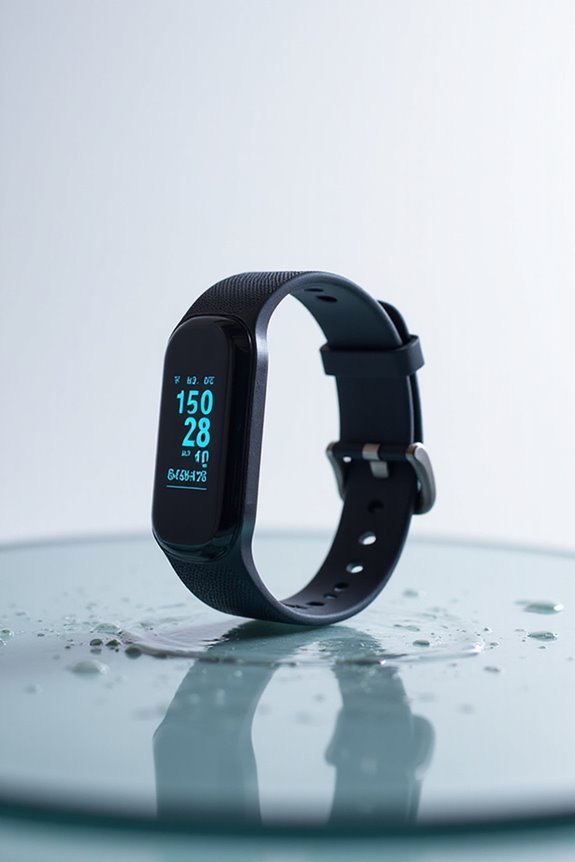
Do Fitness Trackers Track Calories Burned?

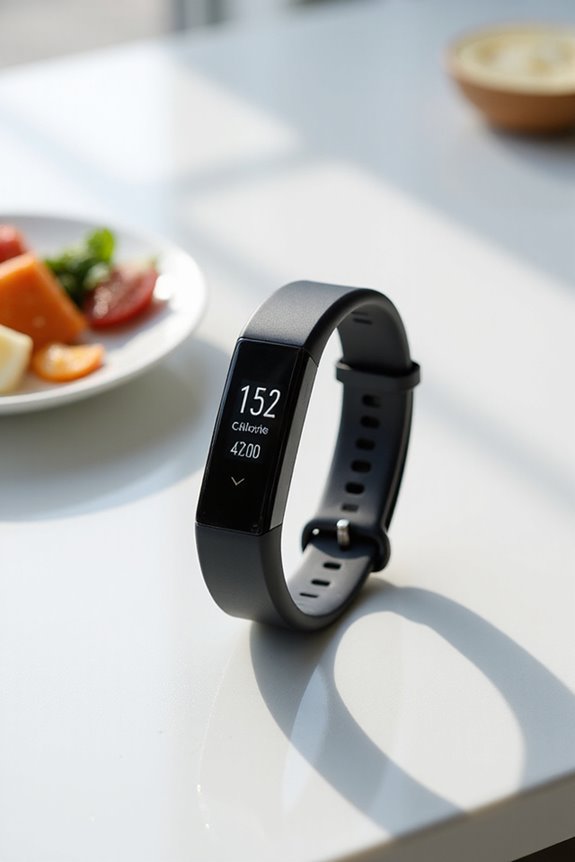
Fitness trackers do track calories burned by using personal data, such as age and weight, along with sensor readings like steps and heart rate. These devices estimate calorie burn during activities, though accuracy can vary. For instance, the average error rate is around 27%, meaning it’s better to view these numbers as rough estimates. Knowing this helps us use these trackers effectively. For more insights and tips on maximizing their use, keep exploring!
Key Takeaways
- Fitness trackers estimate calorie burn using personal data like age, weight, and heart rate, but the accuracy can vary widely.
- The average error in calorie estimates from fitness trackers is about 27%, with some trackers missing estimates by up to 93%.
- heart rate data significantly improves calorie tracking accuracy, particularly for readings under 150 bpm.
- Limitations such as generalized algorithms and user variability affect the accuracy of calorie counts recorded by fitness trackers.
- Modern devices use sensor fusion and AI integration to enhance calorie tracking precision and personalize user experiences.
Understanding Calorie Burn Estimation
You may be interested


When it comes to understanding how fitness trackers estimate calorie burn, we might ask ourselves: how do these devices really work? The foundation of calorie tracking lies in algorithms that utilize personal data such as age, weight, and gender to tailor their calculations. These algorithms combine sensor data—like steps, movement, and even GPS—with an individual’s basal metabolic rate (BMR) to give us a total calorie burn estimate.
However, the estimation accuracy can vary. Different activities trigger different metabolic rates, and sometimes these trackers might not capture individual differences like muscle mass. Regularly updating our profile info can help refine calorie burn predictions, increasing their reliability. Additionally, fitness trackers also provide comprehensive health monitoring features, which contribute to a better understanding of overall fitness levels. Overall, while fitness trackers offer valuable insights, their calorie estimates can still have notable margins of error.
The Role of Heart Rate Measurement
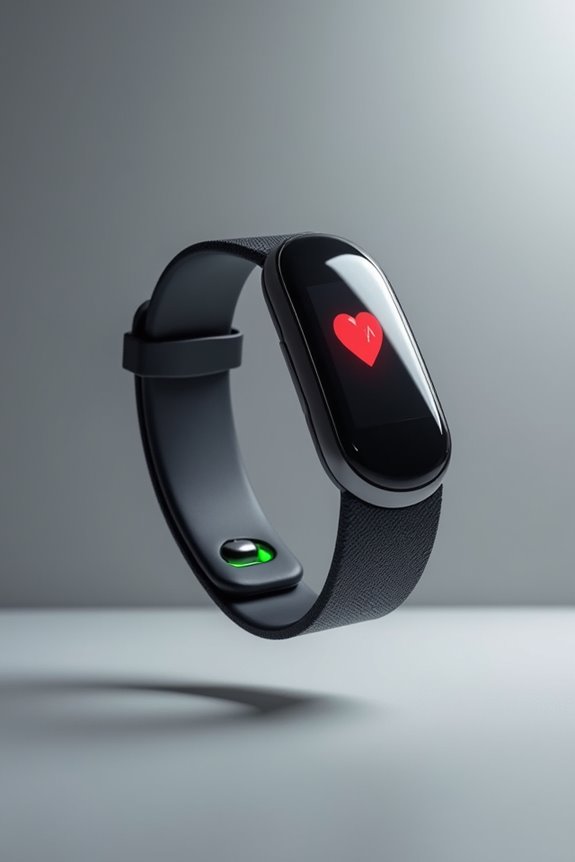
While it may seem straightforward, heart rate measurement plays an essential role in how fitness trackers estimate calorie burn. These devices mainly use your heart rate data combined with other sensors to provide a more accurate calorie count.
- Accuracy Matters: For heart rates under 150 bpm, trackers tend to be reliable. However, things get fuzzy above that range, especially during high-intensity workouts.
- Heart Rate Variability: This is a critical metric, indicating how your heart responds to stress and exertion. Additionally, ECG monitoring can enhance the accuracy of heart rate assessments, leading to better calorie burn estimations.
Limitations of Fitness Trackers

The inherent limitations of fitness trackers become apparent even when we consider how heart rate measurements contribute to calorie estimates. While these devices track our activity, the algorithms driving them often use generalized data, missing individual differences in muscle mass or metabolism.
- User Behavior: Regularly updating personal stats can help, but it doesn’t eliminate inaccuracies.
- Sensor Accuracy: Factors like skin tone or body composition can skew readings.
They struggle to distinguish between different activities, affecting calorie counts. High-intensity workouts may yield better estimates, but daily tasks often confuse the algorithms. Additionally, they don’t factor in important aspects, like stress or hormonal changes. Ultimately, while fitness trackers offer valuable insights, we must remember their limitations when interpreting calorie data. Furthermore, relying on continuous health metrics can provide a broader understanding of overall wellness beyond just calorie tracking.
Recommended Products
Integrated Device Holder allows you to keep your Smart Phone or Tablet securely in place. Compatible with over 40+ apps.

【20” WIDE RUNNING DECK】The full-size treadmill features a spacious 20-inch-wide running deck, allowing you to reach your full potential in running with ample room for natural strides and enhanced comfort.

WIDE RUNNING DECK: The extra-wide running surface supports your stride and keeps you low to the ground giving you a real running experience without the dangers of running outside. The smooth running surface supports speeds from 0.6 - 9 MPH. Max Weight is 265 lb.
Comparing Device Accuracy
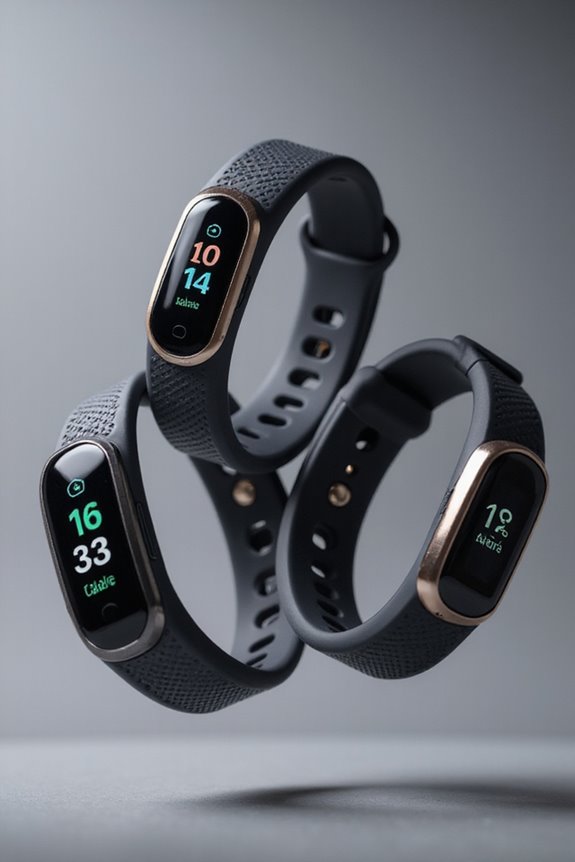
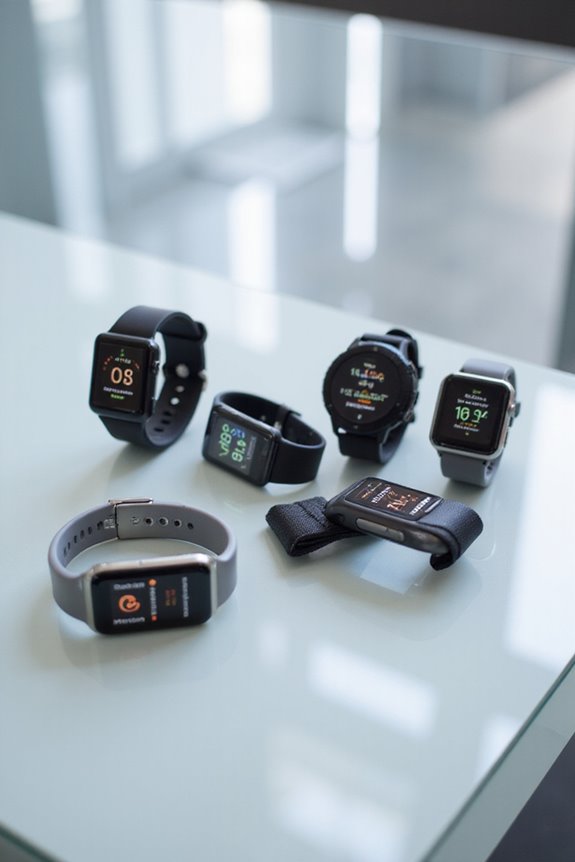
How accurate are fitness trackers when it comes to estimating calories burned? When we look at device comparisons, we notice significant accuracy discrepancies. Studies show that popular trackers can miss the mark on calorie burn by as much as 93%.
- The Apple Watch often overestimates calorie burn, especially during exercise.
- Garmin devices excel in step counting but struggle with energy expenditure.
- Fitbit Charge gives reliable step counts but falters in calorie estimation.
No major tracker consistently delivers accurate results across the board. Truth be told, different models and their technology impact how well they measure calories burned. Relying solely on these devices for precise calorie tracking might lead us astray in our fitness journeys. Many trackers also estimate calories burned based on factors like heart rate and movement patterns, which can introduce further inaccuracies.
Recommended Products

ADVANCED PERFORMANCE MONITOR: Sunny Health & Fitness’ most advanced performance monitor tracks: Speed, Avg Speed, Max Speed, Cadence (RPM), Avg Cadence, Max Cadence, Distance, Target Distance, Time, Calories, Race, Target Time, and Pulse.
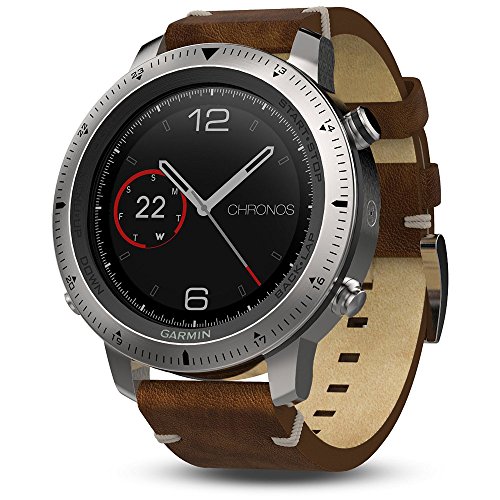
Premium multisport watch with durable stainless steel housing, a high-strength, scratch-resistant sapphire lens and a premium leather band

Suunto Vertical 2 is designed for outdoor athletes and adventurers who demand more from their gear — long battery life, brighter screen, tougher hardware, and new features to guide their way
Algorithms Behind Calorie Tracking
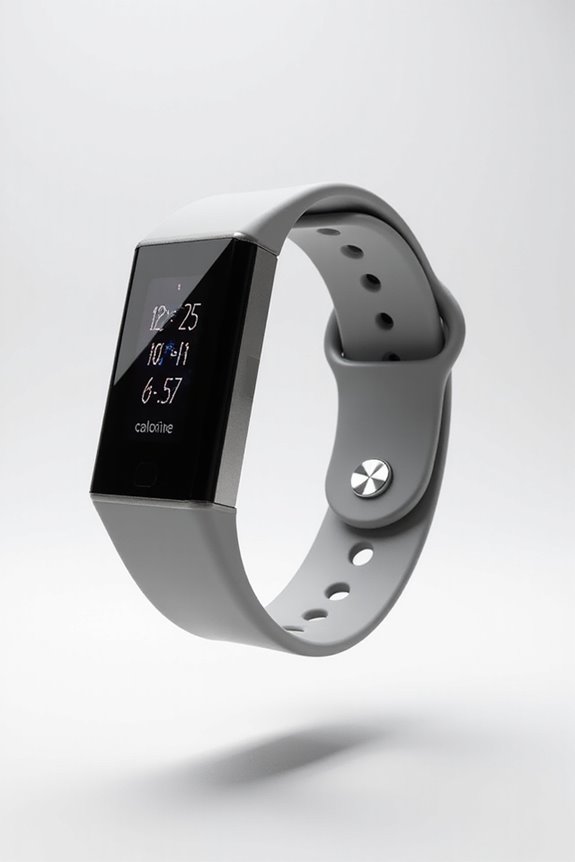
Understanding the algorithms behind calorie tracking can truly enhance our experience with fitness trackers. These algorithms primarily use sensor data like heart rate and movement to estimate calories burned. They rely on algorithm training, often based on individuals with normal weight, which can limit accuracy for diverse users.
Researchers at Northwestern University developed a new algorithm trained on data from people with obesity, utilizing machine learning techniques to improve accuracy. It factors in unique physiological traits, like altered gait and energy expenditure patterns.
This open-source approach achieves over 95% accuracy, offering a more personalized experience than commercial options, which often underestimate calories for those with obesity. By incorporating various movement patterns, fitness trackers can deliver more reliable results in our fitness journeys. Additionally, comprehensive health monitoring ensures that multiple factors contribute to overall energy expenditure beyond just activity level.
Variability in Calorie Tracking Results
When we explore the topic of variability in calorie tracking results, it’s clear that accuracy can differ widely across various fitness trackers. Some important points to reflect on include:
- Device Accuracy: The Apple Watch boasts around 71% accuracy in calorie tracking, but many other devices can be off by a staggering 93%.
- User Variability: Factors like skin color, body mass index (BMI), and activity type all impact precision. For instance, people with obesity may see greater inaccuracies due to different movement patterns.
- Activity Type: Simple activities, like walking, often yield more reliable numbers than mixed workouts, like circuit training.
These factors highlight the need for us to take calorie tracking data as approximate rather than exact measurements, encouraging a balanced view of our fitness journeys.
Practical Applications for Users
While using fitness trackers, we can explore a variety of practical applications that enhance our fitness experience and help us achieve our goals.
- User Motivation: Calorie estimates can inspire us to stay active by offering immediate feedback on our physical exertion.
- Tracking Habits: By recognizing patterns in our daily activity, we can adjust our routines for better results.
- Weight Management: Integrating calorie data with our nutritional intake supports mindful eating, even with some inaccuracies.
- Trend Analysis: Monitoring our total daily calorie burn helps us identify changes over time.
- Engagement Features: Connecting our trackers to apps for goal setting or social sharing keeps us motivated.
These applications combine to enrich our overall fitness journey effectively.
Recommended Products

Club-Quality Design for Home Use – Built with the same durable components found in premium gym equipment, engineered for quiet, comfortable, in-home performance.

🎁🎁🎁Unlock Your Free Gift! Simply Bundle The Yoga Mat, Extender Belt Attachments, And Barbell Pad In Your Cart. ❤️❤️❤️❤️❤️One-Year Price Guarantee!One-Year Price Guarantee!One-Year Price Guarantee!

Club-Quality Design for Home Use – Built with the same durable components found in premium gym equipment, engineered for quiet, comfortable, in-home performance.
The Impact of Activity Type on Calorie Estimates
The type of activity we engage in can greatly influence the accuracy of calorie estimates provided by fitness trackers. For instance, consistent activities like walking or running tend to yield more accurate results than irregular tasks such as cycling or household chores.
- Activity Categorization: Trackers often struggle to distinguish between different activities, impacting calorie accuracy.
- Movement Variability: Fluctuations in intensity, like those during strength training or varying efforts in daily tasks, can lead to unreliable calorie counts.
Many devices show significant error rates, sometimes exceeding 30%, particularly in mixed activity scenarios. Even heart rate monitors, while somewhat accurate, show energy expenditure estimates with large errors, averaging 27%. Consequently, the type of activity impacts how well these devices perform in tracking calories.
Recommended Products

Effortlessly Track And Train Your Pack With The Garmin Alpha 300i Handheld Training and Tracking, Monitor Up To 20 Dogs Using Compatible Collars, With A Range Of Up To 9 Miles. Get Vital Hunt Metrics Like Distance, Speed, And Time On The Dog Info Screen. Receive Real-time Alerts For "treed" Or "on Point" Dogs, Improving Your Hunting. Organize Hunts By Grouping Dogs And People. Store Info For 250 Dogs For Seamless Collar Switching In The Field.

Effortlessly Track And Train Your Pack With The Garmin Alpha 300i Handheld Training and Tracking, Monitor Up To 20 Dogs Using Compatible Collars, With A Range Of Up To 9 Miles. Get Vital Hunt Metrics Like Distance, Speed, And Time On The Dog Info Screen. Receive Real-time Alerts For "treed" Or "on Point" Dogs, Improving Your Hunting. Organize Hunts By Grouping Dogs And People. Store Info For 250 Dogs For Seamless Collar Switching In The Field.

【 FoMaKo 4K PTZ Camera 】. Supports HDMI 2.0 interface and Output HDMI 4K 30fps, 1080P 60fps Uncompressed Ultra High Definition Video. UHD HD Video Resolution: Resolution is up to 3840x2160 with frame rateup to 30fps. 1/2.8 inch high quality CMOS sensor, 8.42MP Effective Pixels. Made for Church Live Services, house of Worship, Teaching and Education, Broadcast, High-Tech Conference, Summit Forum, Events. PoE supported.
Enhancements in Tracking Technology
As fitness trackers evolve, we’re witnessing significant enhancements in tracking technology that boost the accuracy of calorie estimates.
- Sensor Fusion: Modern devices now integrate multiple biosensors, like accelerometers and heart rate monitors, to refine calorie calculations. This combination helps differentiate activity types and intensities for more precise readings.
- User Customization: New algorithms tailored for diverse user populations, especially those with obesity, enhance accuracy by addressing unique movement variations.
- AI and Real-Time Feedback: With AI, wearables adapt calorie predictions based on individual activity habits and provide immediate insights during workouts.
Together, these advancements create a more personalized and reliable tracking experience, empowering us to achieve our fitness goals with greater confidence.
Recommended Products

ACCURACY - SMART SENSING - Oura tracks over 50 health metrics, including sleep, activity, stress, heart health, and women’s health metrics. Oura Ring 4 is powered by Smart Sensing, which adapts to you — delivering accurate, continuous data, day and night

🦄【Engaging Fitness Experience】Connect the smart treadmill with the UREVO App to enjoy interesting AI rhythm fitness and a virtual city experience. Also, you can track your workout details and elevate your exercise experience with this smart treadmill.
Frequently Asked Questions
Can Fitness Trackers Accurately Measure Calories Burned During Sleep?
When we consider sleep metrics, it’s clear that tracker reliability varies greatly. While fitness trackers provide insights, they often struggle with accuracy in measuring calories burned during sleep due to underlying calculation limitations.
How Do I Calibrate My Fitness Tracker for Better Accuracy?
Oh, we’re all fitness gurus now! For accuracy improvement, let’s embrace calibration methods—20 minutes of outdoor walking should do the trick. Trust us, your tracker’s not psychic, but we can make it smarter!
Are There Specific Activities That Fitness Trackers Struggle to Measure?
We’ve noticed fitness trackers often struggle with measuring calories during strength training, high intensity workouts, yoga poses, and swimming strokes. These activities involve limited wrist movement, leading to inaccurate caloric estimations and underreported effort.
Do Temperature and Humidity Affect Fitness Tracker Calorie Estimates?
Like Pandora’s box, temperature effects and humidity impact our fitness trackers, often leading to inaccurate calorie estimates. We should remember that environmental factors complicate our understanding, prompting us to embrace a more nuanced approach to tracking fitness accurately.
Can I Trust Calorie Counts From Fitness Trackers for Weight Loss?
We can’t fully trust calorie counts from fitness trackers for our weight loss goals, as their calorie accuracy often varies considerably. Instead, let’s use the data as a general reference while focusing on overall activity trends.