As an Amazon Associate, we earn from qualifying purchases. Some links on this site are affiliate links at no extra cost to you. Our recommendations are based on thorough research and editorial judgment.


Are Vegan Supplements Effective?

Vegan supplements can be effective in helping us meet our nutritional needs. Many of us might need extra vitamin B12, as it’s not commonly found in plant foods; about 90% of vegans supplement this vitamin. These products can also support our iron and calcium intake when paired correctly with other nutrients. Daily use of well-formulated supplements is essential for ideal results. Want to know more about what nutrients to focus on and how to choose the right supplements?
Key Takeaways
- Vegan supplements can effectively fill nutrient gaps, particularly for vitamin B12, iron, calcium, and omega fatty acids in plant-based diets.
- Properly formulated vegan supplements improve health and energy, with bioavailability being key for effective nutrient absorption.
- Daily supplementation is often recommended for consistent nutrient levels, especially for vitamins like B12 and D due to absorption challenges.
- Regular monitoring of nutrient levels is crucial to adjust supplement dosages and ensure adequate intake for specific dietary needs.
- Research is needed to better understand the synergistic effects of vegan supplements with whole foods and their interactions with the gut microbiome.
Understanding Vegan Supplements
You may be interested



Vegan supplements play an important role in helping individuals maintain a balanced diet. As we’ve seen, vegan supplement trends highlight the high awareness among vegans about nutrient absorption, particularly when it comes to crucial nutrients like vitamin B12. Research shows approximately 92% of vegans use B12 supplements, considerably more than the general population. Other vitamins, like B2, have lower bioavailability from plants, which means our bodies may not absorb them as well.
While some nutrients are less commonly supplemented, we should be aware of how properly formulated supplements can make a difference. As we navigate our vegan journeys, it’s important to stay informed about which supplements we need for ideal health and enhanced energy. Algae-based omega supplements can also provide significant benefits for vegans looking to enhance their omega fatty acid intake. Balancing our diet with thoughtful supplementation can lead to positive results.
Common Nutrient Deficiencies in Vegan Diets
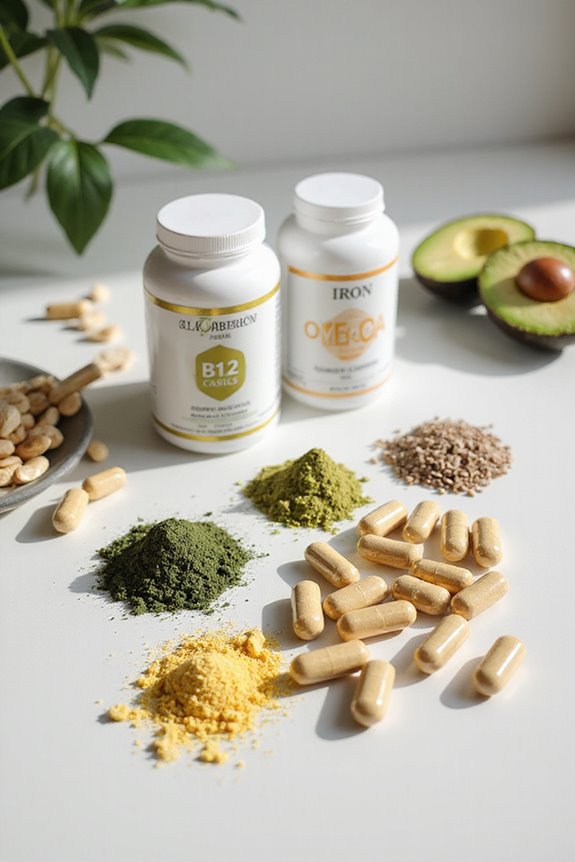
As we explore the world of vegan diets, it’s important to understand some common nutrient deficiencies that may arise.
- Iron: While plant-based diets often have adequate iron, plant-form iron is less absorbable. This means we need to be mindful of enhancing our iron absorption by pairing iron-rich foods with vitamin C.
- Calcium Sources: Without dairy, our calcium intake could be lower. We can turn to fortified plant milks, tofu, and certain leafy greens, but we should remember that their bioavailability can vary.
- Zinc Absorption: Zinc from plant sources, like legumes and nuts, is also less absorbable. By soaking or fermenting these foods, we can help improve zinc absorption. Incorporating higher price point vegan omega-3 sources may also aid in overall nutrient intake.
Monitoring these nutrients can help keep our diets balanced.
The Importance of Vitamin B12 Supplementation

The journey to a balanced vegan diet often requires us to pay particular attention to vitamin B12, especially since this essential nutrient is seldom found in plant-based foods. B12 sources like fortified cereals, plant-based drinks, and nutritional yeast can help, but many of us face supplementation challenges. Studies show that up to 90% of vegans may struggle with B12 deficiency, particularly pregnant women and children. Regular supplementation with doses of 50 to 100 micrograms can effectively prevent this issue but must be managed carefully. It’s vital for us to consult guidelines and monitor our B12 levels, ensuring we meet our needs to support overall health during our vegan journey. Additionally, diverse strains of probiotics can complement a vegan diet by promoting gut health, which may further assist in nutrient absorption.
Recommended Products

Packaging may vary - You may receive our fresh new label, but it's still the great taste you love.

Cellular Energy Metabolism and Cardiovascular support supplement: Contains one 60 count bottle of Jarrow Formulas Ultra Strength Methyl B-12 5000mcg & Methyl Folate 800mcg Chewable Tablets for a 60-day supply.

Foundational Elements for Wellness: Pure Vitamin B12 Methylcobalamin powder, a Vitamin B12 supplement, is the cornerstones of health, playing critical roles in your overall health and wellness. Ensure your body has the right building blocks for vitality.
Evaluating the Bioavailability of Vegan Supplements

How do we determine if the vegan supplements we choose really work? Evaluating bioavailability factors is essential. These factors affect supplement absorption and how well our bodies utilize nutrients from plant-based sources.
For instance, plant-derived omega-3 supplements often fall short because our bodies struggle to convert ALA into EPA and DHA effectively. On the other hand, microalgal oil does boost these important components.
Similarly, certain antinutrients in plants can hinder calcium absorption. Yet, processing methods like germination can enhance bioavailability. Additionally, selecting supplements with high protein content can contribute to improved muscle recovery and overall health.
In our quest for peak nutrition, understanding these nuances can guide us toward more effective vegan supplements. Keeping an eye on trends and research can help us make informed choices and guarantee we’re getting what we need.
Recommended Products

JOINT COMFORT: Independently tested and proven to be the most potent joint health supplement in its class. In recent a scientific study, FREZZOR OMEGA-3 BLACK Capsules was shown to be 53 TIMES more EFFECTIVE than the other mussel oil competitors or other essential fatty acids supplements.

Macula & retina support: This supplement is formulated with pharmaceutical-grade omega 3 fatty acids and enhanced with science-backed lutein and zeaxanthin to support macular health

ALWAYS FRESH, NEVER FISHY: We strive to deliver exceptional quality - that means a fish oil supplement without the aftertaste or fish burps that often follow low-quality fish oil capsules. Our Omega-3 oil is extracted, with minimal heat exposure, through a 10-step refinement process that removes fishy odors and impurities.
The Role of Iron and Riboflavin in Vegan Nutrition

When we consider a vegan diet, it’s essential to pay attention to key nutrients like iron and riboflavin.
Iron Sources and Absorption
Vegan diets often include iron-rich foods, such as fortified cereals, beans, and nuts. However, plant-based non-heme iron is less efficiently absorbed than heme iron from animal sources. To improve iron absorption, pairing vitamin C-rich foods with meals can be beneficial.
Riboflavin Sources
Riboflavin, or vitamin B2, is vital for energy metabolism. Vegans can find it in almonds, fortified cereals, and nutritional yeast. Although the intake of riboflavin in vegan diets might be slightly lower than in omnivores, careful planning can keep it adequate. Additionally, regular monitoring of nutrient levels through blood tests for vegans can help ensure that key nutrients like iron and riboflavin are maintained.
Recommended Products

✔️ PREMIUM QUALITY: Blue Spirulina Powder by Food to Live is a premium quality fine powder. It is a Kosher superfood. Moreover, its free of trans-fat and cholesterol.

✔️EASY TO BLEND: Seamlessly mixes into hot coffee, iced tea, and warm milk.

✔️GREAT DETOX PRODUCT: Organic Wheatgrass Powder from Food to Live contains a large amount of chlorophyll, which perfectly removes toxins from the body.
Long-Term Effects of Vegan Diets on Nutritional Status
Vegan diets have become increasingly popular, leading many to explore their long-term impact on nutritional status. One of the primary concerns involves compliance with vegan dietary guidelines, which can sometimes lead to nutrient absorption challenges.
- Research indicates that long-term vegans may experience lower bone mineral density due to reduced intake of vital nutrients like calcium and vitamin D.
- Common nutritional deficiencies include vitamin B12, omega-3 fatty acids, and high-quality protein, which can impact overall health.
- It’s important for those following a vegan diet to plan meals carefully to avoid these deficiencies and guarantee adequate nutrient intake.
Compliance and Satisfaction With Vegan Supplementation
Understanding compliance and satisfaction with vegan supplementation is essential as we navigate the unique nutritional landscape of a plant-based lifestyle.
Many of us, around 50.1%, turn to vitamin B12 supplements, with compliance trends indicating that vegans often adhere more closely to macronutrient recommendations than omnivores. While supplements like protein powders help fill nutrient gaps, satisfaction levels often relate to how well these products meet our dietary needs.
The awareness of potential nutrient deficiencies motivates us to supplement, supporting a healthier, more balanced vegan diet. However, challenges like varying supplement quality can impact our overall satisfaction and compliance. By addressing these factors, we can enhance our experiences with vegan supplementation, making it a more effective part of our lifestyles.
Recommended Products

PURE & NATURAL: Prescribed for Life MethylCobalamin (Vitamin B12) is a pure, single raw ingredient. No additives. No preservatives. No fillers or binders.

Arrow Formulas Methyl B-12 - Methylcobalamin is the biologically active coenzyme form of vitamin B12 that helps support cellular energy function, sleep, mood, and maintains brain health.

Cellular Energy Production and Brain Health support supplement*: Contains one 60 count bottle of Jarrow Formulas Maximum Strength Methyl B-12 5000 mcg Chewable Tablets for a 60-day supply.
Impact of Plant-Based Diets on Chronic Disease Risk
As we embrace a plant-based lifestyle, it’s essential to explore how these diets can influence chronic disease risk. Research shows that a strong commitment to plant-based eating not only supports weight management but also greatly lowers the chances of heart disease, diabetes, and other chronic conditions.
Key benefits include:
- A 22% reduction in cardiovascular mortality through vegetarian diets
- Lower instances of hypertension and stroke linked to high vegetable and whole grain intake
- Improved immune system function due to antioxidants in plant foods
These plant-based benefits aren’t just about the food we eat; they’re about fostering a healthier future. By focusing on diverse plant foods, we can actively promote chronic disease prevention, enjoying both better health and wellness along the way.
Research Gaps in Vegan Supplement Effectiveness
Moving from the health benefits of plant-based diets, it’s worthwhile to recognize the challenges surrounding vegan supplements. There are notable research gaps impacting their effectiveness. Here are a few key points:
- Synergistic Effects: Research on how combining various vegan supplements with whole foods may enhance nutrient absorption is limited.
- Bioavailability: There’s insufficient data on how to improve the absorption of essential nutrients like iron and zinc from plant sources.
- Gut Microbiome: Very few studies examine how our gut microbiome influences the efficiency of vegan supplements, particularly probiotics and prebiotics.
Moreover, we often see varying responses to supplementation based on sex, and the long-term impacts remain largely unexplored, leaving us with many unanswered questions in the domain of vegan nutrition.
Recommendations for Vegans Considering Supplements
When we look at the world of vegan supplements, it’s clear that thoughtful consideration can make a significant difference in our nutrition journey. To help optimize our supplement intake, we should keep a few things in mind:
- Supplement Timing: Daily supplementation is generally preferred for maintaining consistent nutrient levels, though some offer weekly options for convenience.
- Dosage Guidelines: For Vitamin B12, aiming for about 2.4 mcg daily is essential, while Vitamin D suggests around 10 µg/day.
- Additional Considerations: Pay attention to iodine, selenium, and calcium; recommended doses include 110 µg/day for iodine and around 5 µg/day for selenium.
Recommended Products

OPTIMIZED B-COMPLEX: Jarrow Formulas B-Right, Optimized B-Complex featuring vitamin B1, vitamin B2, vitamin B5, vitamin B6, vitamin B9 and vitamin B12 support cellular energy, immune health and stress management(1)

The information below is per-pack only

Foundational Element for Wellness: Cyanocobalamin B12 powder, a Vitamin B12 supplement, serves as an essential nutrient that helps maintain the body’s natural functions. It’s an easy way to support your routine with a key vitamin for daily nourishment.
Frequently Asked Questions
Can Plant-Based Supplements Replace Whole Foods in a Vegan Diet?
Imagine a garden thriving with vibrant produce. While plant-based supplements can fill gaps in our diet, they can’t replace the rich array of nutrients found in whole food alternatives essential for balanced plant-based nutrition.
How Do Vegan Supplements Compare in Cost to Animal-Based Options?
In our cost analysis of vegan versus animal-based options, we notice significant price comparisons. While some vegan supplements may be pricier due to sourcing, overall, many plant-based diets offer substantial savings on food expenditures.
Are There Side Effects Associated With Vegan Supplements?
When exploring side effects of vegan supplements, we should consider allergic reactions and dosage concerns. It’s essential to monitor our intake closely and consult with professionals to guarantee we’re meeting our nutritional needs safely.
Can Vegan Supplements Interact With Other Medications or Supplements?
Did you know over 50% of people using supplements experience interactions? We need to be cautious about vegan interactions with medications. Prioritizing supplement safety means consulting healthcare providers before starting any new vegan supplements.
How Do Environmental Factors Affect the Effectiveness of Vegan Supplements?
Environmental factors greatly affect nutrient absorption in vegan supplements. With climate impact influencing plant nutrient profiles, it’s essential we consider these elements to enhance our understanding and effectiveness of our dietary choices and supplement use.