As an Amazon Associate, we earn from qualifying purchases. Some links on this site are affiliate links at no extra cost to you. Our recommendations are based on thorough research and editorial judgment.


10 Best Mental Health Books

Looking for mental health resources? Top books include “The Magic of Mindful Self-Awareness” for clarity, “The Body Keeps the Score” for trauma healing, and “Atomic Habits” for building positive routines. You’ll find practical guides like “Get Out of Your Head” to combat negative thinking and “Your Mind is Playing Tricks on You” for anxiety management. These accessible reads offer exercises, relatable stories, and evidence-based strategies to support your emotional wellbeing. The following selections provide tools for various mental health needs.
Key Takeaways
- Mental health books offer specialized resources for specific issues like anxiety, stress management, and breaking negative thought patterns.
- Credible authors have relevant educational backgrounds, professional experience, and support their content with evidence-based information.
- Effective mental health books include practical tools like worksheets, journaling prompts, and frameworks for implementing positive changes.
- Reading mental health literature reduces stress, increases knowledge, and provides motivation while creating a sense of community.
- Recommended titles include “The Body Keeps the Score” for trauma, “Atomic Habits” for behavior change, and “Get Out of Your Head” for negative thinking.
The Magic of Mindful Self-Awareness: Stop Overthinking and Clear Your Mind

You may be interested


For overthinkers seeking freedom from mental clutter, “The Magic of Mindful Self-Awareness” provides a practical pathway to mental clarity. Author Matt Tunney draws from his remarkable journey from prison to monkhood, offering accessible techniques you can integrate into your daily routine.
The book presents a straightforward approach to mindfulness that works for both beginners and experienced practitioners. You’ll learn how to incorporate awareness into everyday tasks, with step-by-step guidance for gradually building your practice. Tunney’s personal stories demonstrate how these techniques work in real-world situations.
Readers appreciate the book’s quick readability, helpful chapter summaries, and additional resources. Many report returning to it regularly to reinforce their mindfulness skills.
Best For: People struggling with overthinking and mental clutter who want practical, accessible mindfulness techniques they can incorporate into their daily lives.
Pros:
- Offers a straightforward, step-by-step approach to mindfulness that works for both beginners and experienced practitioners
- Author’s personal journey from prison to monkhood adds credibility and provides real-world examples of how mindfulness techniques can be applied
- Includes helpful chapter summaries and additional resources that readers can revisit to reinforce their practice
Cons:
- May cover familiar ground for those already well-versed in mindfulness practices
- Some readers might prefer more in-depth scientific explanations behind the techniques
- The gradual approach recommended may feel too slow for those seeking immediate results
Your Mind is Playing Tricks on You: Mental Health Guide for Anxiety and Emotional Intelligence
Readers struggling with anxiety and cognitive distortions will find “Your Mind is Playing Tricks on You” particularly valuable as it unpacks the psychological illusions affecting everyday thoughts and behaviors. The book blends neuroscience with relatable examples, showing how mental narratives can sabotage your wellbeing.
You’ll discover practical tools to regain mental clarity and emotional control. The included 30-Day Pattern Breaker workbook helps apply these insights to your daily routine. The author’s personal experiences with anxiety make the content approachable and genuine.
While some readers note the numerous sub-chapters can disrupt flow, many appreciate the scientific explanations of habit formation and emotional triggers. For lasting benefit, you might want to revisit this guide multiple times.
Best For: Individuals seeking practical tools to manage anxiety, overcome cognitive distortions, and build emotional intelligence through a science-based approach combined with actionable strategies.
Pros:
- Blends neuroscience concepts with relatable personal experiences, making complex psychological concepts accessible and applicable to everyday situations
- Includes a structured 30-Day Pattern Breaker workbook that helps readers implement insights and build new mental habits systematically
- Provides actionable techniques for breaking free from emotional addictions, digital distractions, and procrastination cycles
Cons:
- Numerous sub-chapters can disrupt reading flow and make the content feel fragmented at times
- Lacks a more holistic approach that incorporates physical well-being, nutrition, and lifestyle factors that influence mental health
- May require multiple readings to fully grasp and implement all concepts, which could be challenging for those seeking quick solutions
Dark Psychology, Shadow Protocol: The Art of Getting Your Own Way
This intense tactical manual isn’t your typical self-help book—it’s designed for individuals who want to understand the raw mechanics of social power dynamics. The book presents a straightforward exploration of manipulation, persuasion, and control tactics used in everyday interactions.
You’ll find practical strategies for traversing challenging scenarios, from tense office meetings to first dates. The author maintains a serious tone throughout, offering “tactical scenarios” that demonstrate concepts like strategic silence and emotional detachment. While some readers may find the cynical worldview uncomfortable—suggesting everyone is either manipulating or being manipulated—the book equips you with valuable awareness tools without glorifying harmful behavior.
Best For: Readers seeking to understand the mechanics of social influence and power dynamics while developing defensive awareness against manipulation tactics in professional and personal settings.
Pros:
- Provides practical, actionable strategies for navigating challenging social scenarios with clear tactical examples
- Offers valuable insights into recognizing manipulation techniques that others might use against you
- Presents content in a well-structured, straightforward manner without sugarcoating difficult realities of interpersonal dynamics
Cons:
- Adopts a cynical worldview that may be uncomfortable or off-putting for some readers
- Lacks warmth, humor, or emphasis on ethical applications of the techniques presented
- May cause readers to become overly suspicious in everyday interactions, potentially damaging authentic relationships
Dissolving the Anchor: Untethering Dysphoria and Self-Doubt
H.I. Yates offers a unique blend of memoir, poetry, and practical guidance in “Dissolving the Anchor.” You’ll find actionable steps to overcome negative self-image and self-defeating beliefs. The book addresses tough topics like depression with compassion and understanding.
Through raw vulnerability, Yates shares her journey of reclaiming self-worth. Her storytelling resonates deeply, showing how life circumstances can reveal hidden struggles even after personal growth work.
The book provides clear tools for confronting inner battles and rewriting your personal narrative. It’s particularly valuable for anyone maneuvering identity struggles or supporting loved ones through difficult times.
Readers consistently praise this empowering guide for its beautiful combination of personal insight and practical advice, making it a source of hope for those questioning their self-worth.
Best For: People struggling with dysphoria, negative self-image, or self-doubt who are seeking both emotional understanding and practical guidance for personal transformation.
Pros:
- Combines personal storytelling, poetry, and actionable advice to create a comprehensive resource for healing
- Offers specific tools and strategies for confronting inner struggles and rewriting negative narratives
- Addresses sensitive topics like depression and suicide with compassion while including helpful mental health resources
Cons:
- May be emotionally challenging for readers currently in acute mental health crisis
- Some readers might prefer either a pure memoir or a structured self-help format rather than the blended approach
- The deeply personal nature of the content might not resonate with everyone seeking help for dysphoria or self-doubt
The Body Keeps the Score: Brain, Mind, and Body in the Healing of Trauma
Sale


The Body Keeps the Score: Brain, Mind, and Body in the Healing of Trauma
- Penguin Books
- Ideal for a bookworm
- It's a great choice for a book person
Trauma survivors seeking thorough understanding of their experiences will find “The Body Keeps the Score” an illuminating cornerstone in their healing journey. Dr. Bessel van der Kolk’s accessible approach bridges the gap between research and practical application, explaining how trauma impacts not just your mind but becomes encoded in your physical body.
The book critiques traditional talk therapies while offering alternative paths to recovery through three main approaches: top-down (talking and reconnecting), medication, and bottom-up methods that engage the body directly. You’ll discover why practices like EMDR and yoga have proven effective for many trauma survivors, helping to release trapped emotions and sensations that words alone cannot reach.
Best For: Trauma survivors, mental health professionals, and anyone seeking to understand how trauma physically manifests in the body and mind beyond traditional psychological perspectives.
Pros:
- Offers accessible explanations of complex neuroscience concepts, making the biological impacts of trauma understandable for both professionals and survivors
- Presents multiple evidence-based therapeutic approaches beyond traditional talk therapy, including body-centered practices like yoga and EMDR
- Validates the physical manifestations of trauma, helping readers recognize how their bodily symptoms connect to past experiences
Cons:
- Some readers may find the detailed accounts of trauma experiences potentially triggering
- The critique of traditional therapies like CBT might discourage some from pursuing helpful conventional treatments
- Despite advocating for empirically validated methods, some of the recommended approaches have varying levels of research support
The Let Them Theory: A Life-Changing Tool

People struggling with control issues and relationship boundaries will find profound value in “The Let Them Theory.” This transformative self-help tool has garnered significant attention for its invigoratingly simple yet powerful premise: you can’t control others, but you can protect your own peace.
Available in both physical and audio formats, the book resonates with readers who appreciate Mel Robbins’ direct communication style. Many initially skeptical readers report that the concept of “let them” becomes a mental reset button for daily situations. The practical applications extend from family dynamics to workplace relationships, helping you release codependent behaviors while fostering self-accountability. Thousands of five-star ratings reflect its effectiveness across diverse life circumstances.
Best For: Individuals struggling with codependency, control issues, or boundary-setting who want a practical framework for improving relationships and personal peace.
Pros:
- Provides a simple yet powerful mental framework (“let them”) that can be applied to various relationships and situations
- Available in multiple formats (physical book and Audible) to accommodate different learning preferences
- Written in Mel Robbins’ direct, engaging style that resonates with readers and makes complex concepts accessible
Cons:
- Some chapters may feel less applicable depending on your specific life circumstances
- May initially feel counterintuitive for those deeply entrenched in controlling behaviors
- Requires consistent practice and self-accountability to see meaningful results in relationships
The Anxious Generation: How Modern Childhood Is Causing Mental Illness

Jonathan Haidt’s groundbreaking book “The Anxious Generation” offers essential insights for parents steering through the digital age with their children. He reveals alarming statistics: depression rates have surged 161% for boys and 145% for girls since 2010, coinciding with smartphone proliferation.
You’ll find four practical recommendations: delay smartphones until high school, postpone social media until age 16, implement phone-free schools, and encourage unsupervised play. Haidt explains how overprotection in real life combined with digital underprotection creates this “anxious generation.”
Today’s children spend nearly 40 hours weekly on screens—a fundamental shift from play-based to phone-based childhood that’s reshaping development. The book ultimately reminds you that parenting’s goal remains consistent: raising self-reliant, happy adults.
Best For: Parents, educators, and policymakers concerned about the mental health of today’s youth and seeking evidence-based strategies to navigate childhood in the digital era.
Pros:
- Provides concrete, actionable recommendations for parents to protect children’s mental health, including specific age guidelines for technology introduction
- Backed by comprehensive research showing clear correlations between smartphone use and declining youth mental health
- Balances critique of digital overexposure with practical solutions that don’t require complete technology abstinence
Cons:
- May be challenging to implement recommendations in households where digital devices are already deeply integrated into children’s lives
- Some suggestions like phone-free schools require systemic changes beyond individual parental control
- Could potentially create social isolation for children whose parents follow these guidelines when peers don’t have similar restrictions
Atomic Habits: An Easy & Proven Way to Build Good Habits & Break Bad Ones
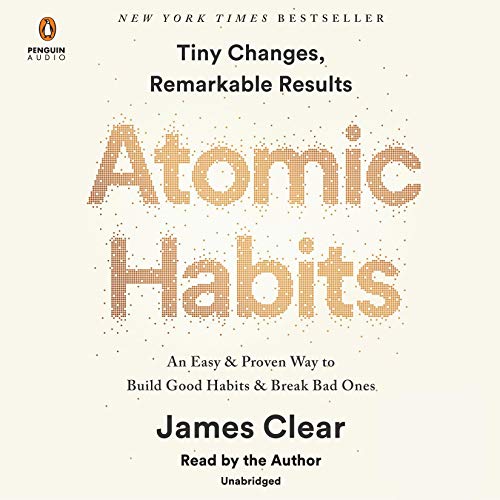
James Clear’s bestselling guide offers five practical strategies for anyone looking to transform their life through small, consistent changes. His concept of “1% improvement” shows how tiny adjustments compound dramatically over time, just like interest on investments.
You’ll learn the four-part habit loop (cue, craving, response, reward) that drives all behavior and discover how to make good habits obvious, attractive, easy, and satisfying. Clear’s approach focuses on identity-level change rather than just outcome-based goals.
The book introduces simple techniques like habit stacking, environment design, and the Two-Minute Rule that make new behaviors stick without overwhelming willpower. You’ll also find practical tracking systems to measure your progress.
Best For: Individuals seeking practical, science-backed strategies to build positive habits or break negative ones through small, consistent changes rather than radical life overhauls.
Pros:
- Provides a clear, actionable four-step framework (cue, craving, response, reward) that makes habit formation understandable and implementable
- Offers simple yet powerful techniques like habit stacking, the Two-Minute Rule, and environment design that require minimal willpower
- Focuses on identity-level change and systems rather than just outcomes, creating sustainable transformation through gradual improvements
Cons:
- Some readers may find the concept of “1% improvements” overly simplified for complex behavioral challenges
- Certain strategies like habit tracking and environment modification may require resources or privileges not available to everyone
- The book’s principles, while broadly applicable, may need significant adaptation for those dealing with clinical issues like addiction or mental health conditions
Get Out of Your Head: Stopping the Spiral of Toxic Thoughts

Individuals struggling with overwhelming negative thought patterns will find “Get Out of Your Head” by Jennie Allen an invaluable resource for breaking free from mental spirals. Allen shares her personal journey through toxic thinking while offering practical strategies grounded in biblical wisdom.
You’ll appreciate Allen’s conversational writing style that makes complex concepts accessible through relatable stories and occasional humor. The book guides you to analyze your thought patterns, embrace gratitude, and discover your true purpose. Many readers return to its pages repeatedly for ongoing inspiration.
Whether you’re experiencing mild stress or persistent anxiety, Allen’s approach helps you reclaim control of your mind for a more peaceful life.
Best For: Women of all ages struggling with negative thought patterns, anxiety, or self-doubt who are open to faith-based solutions and looking for practical strategies to transform their thinking.
Pros:
- Written in an engaging, conversational style with relatable personal stories that make complex concepts accessible and provide immediate connection
- Offers practical, actionable strategies grounded in biblical wisdom to combat toxic thoughts and develop healthier thinking patterns
- Serves as a continual resource that readers can return to for ongoing guidance, with additional study materials available on the author’s website
Cons:
- Primarily approaches mental health from a Christian perspective, which may not resonate with readers seeking secular solutions
- Some readers might find certain concepts oversimplified, particularly those with clinical mental health conditions requiring professional treatment
- The personal anecdotes, while relatable to many, may not address the specific challenges faced by individuals from diverse backgrounds or experiences
The Peace Method Holistic Anxiety Fix Mental Health Journal & Manual
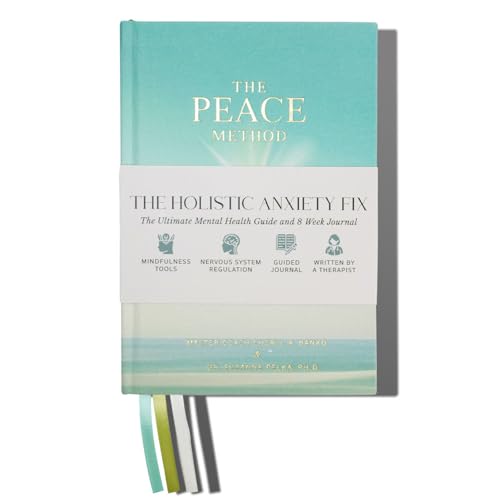
The Peace Method the Holistic Anxiety Fix: Mental Health Journal & Manual | 8 Weeks Daily Journal...
- Struggling with anxiety or stress? - Discover the ultimate self improvement journal, designed to help you navigate life’s challenges with ease. This self healing...
- Daily Prompts & Exercises - This mental health book features daily prompts, short, easy-to-use exercises to decrease anxiety in minutes. With mood tracking the daily...
- Rewire Your Brain - This self development journal, designed to help you rewire your brain using self directed exercises, mind/body techniques, yoga poses, visualization...
Designed for anyone battling the daily challenges of anxiety and stress, The Peace Method offers an 8-week structured approach to finding emotional freedom. This 256-page journal combines daily prompts with practical exercises to help you track your mood and decrease anxious feelings in just minutes.
The journal guides you through a five-step process: Pause to create stillness, Embrace emotions compassionately, Adjust your nervous system with 25+ techniques, Create visualizations of your ideal life, and Empower yourself through affirmations.
With its beautiful Ocean Sun-colored linen cover and thoughtful layout, you’ll find yourself looking forward to each day’s practice. Users consistently report feeling calmer and more centered, earning the journal an impressive 4.8-star rating from 86 reviewers.
Best For: Individuals seeking a structured, holistic approach to managing anxiety and stress through daily journaling exercises and science-backed techniques.
Pros:
- Comprehensive 8-week program combining multiple anxiety-reduction techniques including mindfulness, visualization, and nervous system regulation
- Beautiful, aesthetically pleasing design with quality materials that encourages consistent daily use
- Highly rated (4.8/5 stars) with users reporting significant improvements in anxiety management and overall mental wellbeing
Cons:
- Limited hands-on activities may not suit those who prefer more interactive anxiety management approaches
- At 1.1 pounds and 256 pages, it may be less portable than digital alternatives
- Not available until December 4, 2026, so those seeking immediate anxiety support will need alternative solutions
Factors to Consider When Choosing Mental Health Books

When you’re searching for mental health books, considering several key factors will help you find the most valuable resources for your needs. You’ll want to examine the author’s credentials, checking whether they have relevant education, professional experience, or personal insights that make them qualified to write on the topic. Look for books grounded in scientific research rather than just personal opinion, offering practical tools you can implement in your daily life, and addressing issues that resonate with your specific situation.
Factors to Consider When Choosing Mental Health Books
Selecting the right mental health book can feel overwhelming with so many options available on store shelves and digital platforms. To make a wise choice, first examine the author’s background—look for writers with relevant expertise who communicate complex ideas clearly.
Prioritize books offering practical tools you can implement in daily life. The writing style matters too; an engaging, relatable tone helps you connect with and retain important concepts.
Consider which specific topics you’re most interested in exploring. A book addressing your particular concerns will likely prove more valuable than a general overview.
Finally, don’t overlook reader reviews. Other people’s experiences can provide valuable insights into whether a book delivers meaningful support and relevant information for situations similar to yours.
Credibility of Author
The author’s credibility stands as perhaps the most critical factor when selecting mental health literature. When evaluating a book, take time to research the writer’s educational background, professional experience, and relevant certifications. These qualifications indicate whether they possess the expertise to address complex psychological topics.
Look for authors who actively participate in research or mental health organizations, as this engagement often signals familiarity with current practices. While personal stories can provide valuable perspectives, verify these narratives are balanced with evidence-based information.
Pay attention to endorsements from respected professionals or organizations—these recommendations suggest the author’s work holds merit within the mental health community. Be wary of writers who lack transparency about their credentials or promote unverified claims, as this might compromise the reliability of their guidance.
Scientific Research Basis
Three essential markers distinguish credible mental health books from questionable ones: evidence-based content, peer-reviewed research citations, and methodological transparency. When browsing the self-help section, you’ll want to check whether authors reference actual studies rather than relying solely on personal anecdotes.
Look for books that mention neuroplasticity concepts—how your brain adapts and changes—as this foundation supports many effective therapeutic approaches. Quality resources typically include footnotes, endnotes, or bibliographies listing scientific journals or academic publications.
The best books translate complex research into practical strategies you can use daily. Authors who explain how their recommendations connect to established psychological theories give you confidence that you’re not just following trendy advice but implementing techniques with proven track records.
Practical Application Tools
Effective mental health books go beyond theory by including practical tools you’ll actually use in your day-to-day life. When selecting resources, look for ones that contain structured workbooks, step-by-step guides, and concrete strategies that translate knowledge into action.
The most valuable books include exercises, worksheets, and journaling prompts that engage you actively rather than passively. These interactive elements help reinforce concepts and make them stick. Consider books that blend different approaches like mindfulness techniques and cognitive strategies to give you a diverse toolkit.
Prioritize resources with clear frameworks for building new habits and tracking your progress. Books that offer self-assessment tools let you measure improvements over time, which helps maintain motivation. These practical elements transform abstract concepts into tangible daily practices you can implement immediately.
Personal Relevance
Many readers overlook personal relevance when selecting mental health books, yet this factor can determine whether a resource transforms your life or collects dust on your shelf. When browsing options, consider how closely the content aligns with your specific challenges and current situation.
Books that address your particular struggles—whether it’s anxiety, self-doubt, or relationship difficulties—will naturally resonate more deeply. You’ll find yourself more engaged with material that speaks directly to your experiences. Authors who share relatable stories create an instant connection, making you feel understood rather than isolated.
Look for books that offer customized strategies you can actually implement in your daily routine. When advice feels tailored to your unique circumstances, you’re considerably more likely to apply what you’ve learned and experience meaningful improvement in your well-being.
Frequently Asked Questions
How Do These Books Compare to Therapy Sessions?
Books and therapy serve different purposes in your mental health journey. Books offer affordable, self-paced learning you can access anytime, while therapy provides personalized guidance with professional feedback. Reading works well for gaining knowledge and perspective, but doesn’t replace the interactive problem-solving and accountability that therapy sessions offer. Many people find the best results come from combining both—using books to supplement their therapy work or as an entry point before seeking professional help.
Are Audiobook Versions as Effective as Reading?
Imagine settling into your car for a long commute, pressing play on an audiobook about mindfulness. You’re learning, even while your eyes are on the road.
Audiobooks can be just as effective as reading if you absorb information well through listening. Your learning style matters most. Some people retain information better visually, while others learn effectively through audio. The key isn’t the format but your engagement with the content and how consistently you apply what you’ve learned to your daily life.
Can Mental Health Books Worsen Symptoms Temporarily?
Yes, you might experience temporary discomfort when reading books about mental well-being. This is often called an “emotional processing” phase. When you confront difficult thoughts or feelings through reading, you’re bringing awareness to issues that might have been buried. This temporary intensification of emotions is normal for many readers. If you find a book consistently worsens how you feel, it’s perfectly okay to set it aside and choose another approach that feels more supportive.
How Long Before Seeing Results From These Practices?
Results from personal growth practices vary widely depending on your consistency and the specific techniques you’re using. You’ll likely notice small changes within 2-4 weeks of regular practice. However, meaningful progress often takes 2-3 months of dedicated effort. Some people experience “aha moments” early on, while others see gradual improvement. Remember that growth isn’t linear – you might experience plateaus followed by breakthroughs. Tracking your progress in a journal can help you recognize subtle improvements you might otherwise miss.
Do These Books Require Professional Guidance for Implementation?
Most self-help books are designed for independent use, but your experience may vary. While you can implement many practices on your own, some complex techniques might benefit from professional guidance. You’ll find that books typically include clear instructions and exercises you can follow independently. Consider your personal comfort level with self-directed learning. For deeper issues or if you’re feeling stuck, consulting a professional alongside your reading can enhance your results.