As an Amazon Associate, we earn from qualifying purchases. Some links on this site are affiliate links at no extra cost to you. Our recommendations are based on thorough research and editorial judgment.

10 Best Books on Mental Health Disorders

The best mental health disorder books blend practical advice with readable explanations of complex conditions. Look for evidence-based resources like “Understanding Mental Disorders: Your Guide to DSM-5” or “Grace for the Afflicted” that offer actionable strategies without overwhelming jargon. Quality books include relatable case studies, clear explanations of different disorders, and concrete tools you can implement immediately. Choose books written by credentialed authors that address misconceptions while providing digestible information for both self-help and supporting others. The following selections offer valuable insights for anyone seeking deeper knowledge.
Key Takeaways
- Expert-authored books with clinical credentials offer more reliable information on mental health disorders than those by non-specialists.
- The best mental health books combine scientific accuracy with accessible language that avoids overwhelming readers with jargon.
- Look for books that include practical coping strategies alongside disorder descriptions, providing actionable steps for managing symptoms.
- Resources with personal narratives and case studies help readers connect emotionally while understanding complex psychological conditions.
- Books that address stigma and misconceptions about mental health disorders can facilitate better understanding and support from family members.
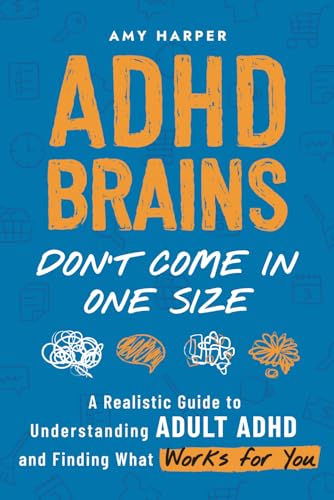
ADHD Brains Don’t Come In One Size: A Realistic Guide for Adults with ADHD

You may be interested


For adults struggling with the daily challenges of ADHD, finding practical guidance that acknowledges the uniqueness of each person’s experience can be life-changing. Amy Harper’s approachable book speaks directly to readers through a conversational style that avoids clinical terminology. You’ll appreciate the ADHD-friendly format with concise chapters and summary “Takeaway” sections.
The book offers various productivity systems like Kanban Boards and the Eisenhower matrix while encouraging you to experiment and find what works for your specific needs. With additional resources including a digital planner and three workbooks, this guide helps you navigate emotional regulation, relationships, and workplace dynamics with realistic strategies. Readers consistently praise its humor, relatability, and practical approach to making daily life more manageable.
Best For: Adults with ADHD seeking practical, personalized strategies presented in an accessible format that acknowledges the uniqueness of each ADHD experience.
Pros:
- Written in a conversational, jargon-free style with ADHD-friendly formatting including concise chapters and summary sections
- Offers multiple productivity systems and tools while encouraging experimentation to find personalized solutions
- Includes valuable bonus resources (digital planner and workbooks) to support practical application of concepts
Cons:
- May not provide enough clinical or scientific background for readers seeking in-depth neurological explanations
- Some strategies might require additional adaptation for those with severe ADHD symptoms
- The personalized approach means readers must invest time in experimenting with different methods rather than following a single prescribed system
Psychopharmacology: Straight Talk on Mental Health Medications
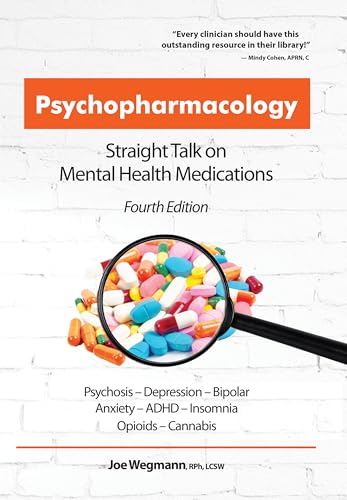
Readers seeking an unconventional perspective on psychiatric medications will find this book’s unique blend of pharmaceutical knowledge and therapeutic insight particularly valuable. The author, who works as both a pharmacist and therapist, delivers information with a distinctive snarky tone rather than clinical detachment.
You’ll appreciate this resource if you want to understand medications in everyday terms, though you should note it’s not designed for professional reference. The content presents the author’s opinions and experiences rather than strictly evidence-based guidelines. While the presentation lacks visual aids and the physical quality isn’t impressive, many readers value the straightforward, conversational approach to a complex subject.
Best For: Laypeople and non-specialized practitioners seeking a conversational, straightforward explanation of psychiatric medications without technical jargon.
Pros:
- Written by someone with dual expertise as both a pharmacist and therapist, offering unique practical insights
- Presents information in an engaging, snarky tone that makes complex topics more accessible
- Provides real-world perspective on medications beyond clinical descriptions found in traditional references
Cons:
- Lacks the precision and evidence-based approach required for professional reference or exam preparation
- Physical quality is poor with crumpling pages and no visual aids to enhance understanding
- Contains subjective opinions and potentially erroneous information rather than comprehensive, academically rigorous content
Grace for the Afflicted: A Clinical and Biblical Perspective on Mental Illness
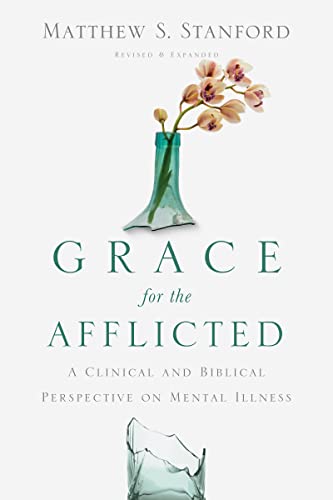
Christians struggling with mental health challenges or those seeking to support loved ones with psychological disorders will find invaluable insights in Matthew Stanford’s “Grace for the Afflicted.” While many faith communities have historically approached mental illness through a purely spiritual lens, Stanford bridges the gap between clinical understanding and biblical wisdom.
This respected neuroscientist debunks common myths within Christian circles—like the notion that mental illness stems from lack of faith. You’ll appreciate how he integrates scientific explanations of brain disorders with compassionate biblical perspectives. The book has transformed lives of readers diagnosed with conditions like schizophrenia by offering both hope and practical guidance. Church leaders and caregivers particularly benefit from Stanford’s balanced approach that honors both medical treatment and spiritual support.
Best For: Christians seeking a balanced approach to mental health that integrates clinical understanding with biblical wisdom, particularly useful for church leaders, caregivers, and individuals diagnosed with mental illness.
Pros:
- Bridges the gap between scientific explanations of brain disorders and compassionate biblical perspectives, debunking harmful myths about mental illness in Christian communities
- Provides practical guidance and hope for those diagnosed with mental conditions and their supporters, emphasizing that recovery is a gradual process requiring medication, prayer, and education
- Serves as an essential resource for ministry leaders to develop more informed, compassionate responses to mental health challenges in their congregations
Cons:
- May challenge deeply held beliefs for some conservative Christians who view mental illness solely through a spiritual lens
- Requires readers to engage with both clinical terminology and biblical concepts, which might be difficult for those unfamiliar with either domain
- Some readers might find the integration approach insufficient if they strongly favor either purely medical or purely spiritual explanations of mental health
Understanding Mental Disorders: Your Guide to DSM-5
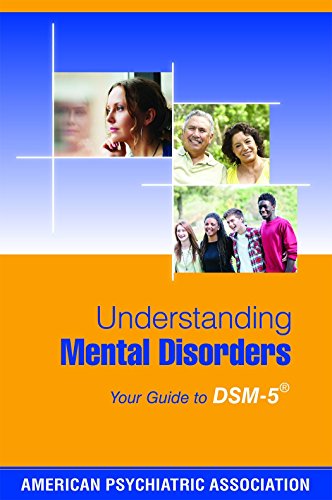
Simplifying complex mental health terminology into accessible language, “Understanding Mental Disorders: Your Guide to DSM-5” stands out as an invaluable resource for anyone seeking clarity on psychological conditions without medical training. Psychology students particularly benefit from this straightforward reference that translates the dense DSM-5 content into readable explanations.
The book includes personal testimonies that help readers connect with different conditions. You’ll find it useful whether you’re supporting a loved one, advocating for services, or simply expanding your knowledge. Many readers appreciate how it cuts through technical jargon to deliver clear explanations and examples of various conditions. For those interested in mental health concepts without wading through the complete DSM-5, this guide offers an accessible entry point.
Best For: Psychology students, mental health advocates, family members of those with mental health conditions, and anyone seeking to understand DSM-5 disorders without medical training.
Pros:
- Translates complex DSM-5 terminology into accessible, easy-to-understand language
- Includes personal testimonies that enhance relatability and practical understanding
- Serves as a convenient reference tool that saves time compared to navigating the complete DSM-5
Cons:
- May oversimplify some clinical concepts for professional practitioners
- Not a replacement for the complete DSM-5 for those requiring diagnostic authority
- Limited technical depth compared to professional clinical resources
The Paranoids Pocket Guide to Mental Disorders You Can Just Feel Coming On
Psychology enthusiasts and those with a sense of humor about mental health will find “The Paranoid’s Pocket Guide to Mental Disorders You Can Just Feel Coming On” a revitalizing departure from typical clinical references. This tongue-in-cheek handbook delivers mental health concepts with a comedic twist, similar to the popular Worst-Case Scenario guides.
You’ll appreciate this book as a thoughtful gift for friends studying psychology or mental health professionals who need a laugh after long days. Readers consistently report laughing out loud at the clever phrasing while still learning interesting concepts. The book’s pick-up-and-browse format makes it perfect for coffee tables or waiting rooms.
Best For: Psychology students, mental health professionals, and anyone with an interest in psychology who appreciates humor that makes light of serious topics without being disrespectful.
Pros:
- Provides comedic relief for mental health professionals and psychology students after stressful days
- Format allows readers to open to any page and find something amusing, making it ideal for casual reading
- Makes a well-received gift for those in psychology-related fields, as confirmed by multiple reader experiences
Cons:
- Not a comprehensive or scientifically accurate reference for mental disorders
- Humor style may not appeal to everyone, particularly those sensitive about mental health topics
- Limited educational value beyond introducing concepts in a memorable way
Mental Health: Understanding Personality Disorders and Mental Illness
For anyone seeking clarity about complex psychological conditions without getting lost in medical jargon, these books on mental health disorders serve as invaluable resources. They offer accessible explanations of personality disorders like narcissism and psychopathy while encouraging proactive approaches to well-being.
You’ll find these books particularly helpful for understanding different personality types and improving your relationships. While readers praise their readability, some suggest doing additional research to get a complete picture. Many appreciate how these resources balance informative content with practical insights, making them useful starting points for your mental health knowledge journey.
Best For: Individuals seeking accessible introductions to personality disorders and mental health concepts who want to improve self-awareness and interpersonal relationships without diving into heavy clinical literature.
Pros:
- Provides easy-to-understand explanations of complex psychological conditions like narcissism, sociopathy, and psychopathy without overwhelming medical terminology
- Offers practical insights for recognizing different personality types, which readers find valuable for improving relationships and workplace interactions
- Encourages proactive approaches to mental well-being with actionable techniques for personal growth and self-improvement
Cons:
- Some books contain inaccuracies or oversimplifications about certain disorders, particularly regarding sociopathy and psychopathy
- Lacks sufficient depth and detail for readers seeking comprehensive understanding of mental health conditions
- Editing and clarity issues in some texts reduce effectiveness, requiring readers to conduct additional research for a complete picture
Recovery from Narcissistic Abuse: Guide to Overcoming Toxic Relationships
Survivors of narcissistic relationships who’ve struggled to make sense of their experiences will find this thorough guide especially valuable. The book expertly breaks down how abusers operate and why leaving these relationships proves so challenging. You’ll discover well-organized content featuring checklists, clear definitions, and detailed explanations of trauma bonding.
While primarily focused on romantic relationship recovery, the guide also touches on childhood narcissistic abuse. Readers consistently praise how the book validates their experiences and offers practical steps for healing. If you’re considering leaving a toxic relationship or working through the aftermath, this resource provides both the understanding and tools you’ll need to reclaim your life.
Best For: People recovering from toxic relationships with narcissists who need validation, understanding, and practical healing strategies.
Pros:
- Provides well-organized content with checklists, clear definitions, and detailed explanations of trauma bonding
- Validates survivors’ experiences and helps them make sense of confusing relationship dynamics
- Offers practical steps and resources for healing and reclaiming one’s life after narcissistic abuse
Cons:
- Primarily focuses on romantic relationships with less comprehensive coverage of family or workplace narcissistic abuse
- May serve more as a primer rather than providing in-depth exploration for those already familiar with recovery processes
- Cannot cover every possible situation or variation of narcissistic abuse experiences
Understanding Mental Illness: A Guide to Mental Health Disorders

Readers seeking a thorough introduction to mental health will find “Understanding Mental Illness: A Guide to Mental Health Disorders” exceptionally valuable. Written by Harvard-trained psychiatrists Drs. Barnes and Wills, this 150+ page guide breaks down complex topics into understandable content for non-professionals.
You’ll appreciate the book’s relatable illustrations showing real people facing mental health challenges, helping you recognize similar situations in your own life. The clear organization makes it easy to navigate different disorders, while the final chapters cover mental illness in specific populations and provide helpful resources for further learning.
Many readers consider this book a must-have household reference, though some wish for more coverage on topics like narcissism.
Best For: Individuals seeking a clear, accessible introduction to mental health disorders, including general readers, family members of those with mental illness, and people interested in understanding basic psychiatric concepts.
Pros:
- Written by Harvard-trained psychiatrists, lending professional credibility and expertise to the content
- Features relatable illustrations of real people with mental illness, helping readers recognize similar situations in their own lives
- Well-organized with clear prose that makes complex mental health topics accessible to non-professionals
Cons:
- At 150+ pages, some readers might want more in-depth coverage of specific disorders
- Limited coverage on certain topics like narcissism, as noted by some readers
- May serve better as an introduction rather than a comprehensive reference for those seeking detailed clinical information
I Hate You–Don’t Leave Me: Understanding the Borderline Personality (Third Edition)

This compassionate guide illuminates the complex world of Borderline Personality Disorder through accessible language and real-life examples. You’ll find relatable anecdotes that help identify patterns in your own experiences or those of loved ones. The third edition offers an optimistic outlook on treatment possibilities backed by current research.
If someone in your life has BPD, this book can transform your understanding of their behaviors. You’ll discover practical strategies for maintaining healthier relationships and supporting recovery. The author contextualizes BPD within broader societal issues, suggesting that cultural factors contribute to its prevalence.
Whether you’re personally affected by BPD or supporting someone who is, this straightforward resource requires no psychology background to understand its valuable insights.
Best For: Individuals directly affected by Borderline Personality Disorder, their family members and loved ones, mental health professionals, and anyone seeking to understand complex emotional patterns and relationship dynamics.
Pros:
- Presents complex psychological concepts in accessible, jargon-free language that doesn’t require prior knowledge of psychology
- Offers practical strategies and insights for both those with BPD and their support networks to improve relationships and communication
- Includes updated research and an optimistic perspective on treatment possibilities, countering outdated, pessimistic views of the disorder
Cons:
- Some readers might find the societal analysis of BPD’s causes oversimplified or too broadly generalized
- Relies heavily on anecdotal examples which, while helpful for recognition, may not represent all experiences of BPD
- May not provide sufficient depth for mental health professionals seeking advanced clinical approaches or treatment protocols
Personality Disorders and Mental Illnesses: The Truth About Psychopaths, Sociopaths, and Narcissists
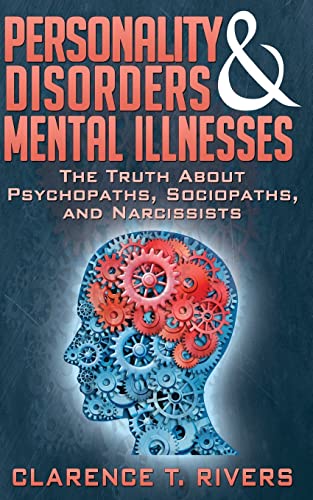
Steering relationships with people who display personality disorders can be both confusing and emotionally devastating. This concise 150-page book offers you clarity by distinguishing between mental illnesses and personality disorders like narcissism, psychopathy, and sociopathy.
You’ll find practical checklists to help recognize concerning behaviors in relationships, though some readers note editing issues and inconsistencies in the content. The section on narcissism receives mixed reviews, with some finding it less substantial than other chapters.
Despite its shortcomings, this book serves as an accessible introduction if you’re seeking to understand these complex topics. It’s particularly valuable if you’ve experienced manipulative relationships and want to establish healthier boundaries going forward.
Best For: Readers seeking an accessible introduction to personality disorders, particularly those who have experienced manipulative relationships and want to understand the psychology behind toxic behaviors.
Pros:
- Provides practical checklists and tests to identify concerning traits in relationships
- Offers clear distinctions between mental illnesses and personality disorders in concise, jargon-free language
- Validates readers’ experiences with manipulative individuals and empowers them to establish healthier boundaries
Cons:
- Contains editing issues including repeated paragraphs and typographical errors
- Presents inconsistent information about psychopaths and sociopaths that may contradict established literature
- The section on narcissism lacks depth and is criticized for being preachy compared to other chapters
Factors to Consider When Choosing Books on Mental Health Disorders

When you’re looking for books on mental health disorders, several key factors can help you find the right resources for your needs. You’ll want to evaluate whether the book offers clinical expertise, personal stories, or both, while ensuring the writing style is accessible and engaging enough to keep you reading. It’s equally important to verify that the information is evidence-based and up-to-date, matches your knowledge level, and approaches the subject with sensitivity that helps reduce stigma rather than reinforcing it.
Clinical vs. Lived Experience
As you navigate the vast landscape of mental health literature, understanding the distinction between clinical and lived experience perspectives can greatly impact your reading journey. Clinical books offer evidence-based practices and scientific explanations that provide structured knowledge about specific disorders and treatment approaches.
In contrast, books written from lived experience perspectives share personal stories that can offer validation and emotional connection. These narratives often highlight recovery journeys and practical coping strategies that have worked in real-life situations.
You might find that a balanced approach works best for your needs. Combining the scientific foundation of clinical resources with the relatable insights from personal accounts can give you a more complete understanding. Your choice ultimately depends on whether you prefer academic information or authentic stories that illustrate the day-to-day reality of managing mental health challenges.
Readability and Accessibility
The quality of writing in mental health books greatly impacts how effectively you’ll absorb and apply the information. When selecting resources, look for books that use clear, straightforward language rather than complex psychological terminology. Authors who can explain intricate concepts in simple terms will help you grasp important ideas without feeling overwhelmed.
Consider books that include real-life examples and stories, as these make abstract concepts more relatable to your experiences. Well-organized chapters with concise formatting keep you engaged, especially if you sometimes struggle with focus. Visual elements like diagrams or charts can notably improve your understanding of key concepts.
Books that offer chapter summaries or bullet-pointed takeaways provide quick reference points, making it easier to revisit and reinforce important information when needed.
Evidence-Based Information Quality
Evaluating the quality of information stands as a fundamental aspect of selecting mental health literature. When browsing books on this topic, you’ll want to check if the content reflects current research and established practices in the field.
Look for authors with backgrounds in psychology or psychiatry, as their expertise typically guarantees more reliable information. Books that include citations and references to peer-reviewed studies offer stronger support for their claims.
Pay attention to how complex concepts are explained—good resources simplify terminology without distorting facts. Be wary of books that rely heavily on personal stories without scientific backing. While personal experiences can be valuable, they shouldn’t replace evidence-based information.
The best mental health books balance accessible language with scientific accuracy, giving you information you can trust.
Target Audience Fit
Finding your perfect match among mental health books requires understanding who the author intended to reach. Not every resource will speak to your specific situation or knowledge level.
Books fall into distinct categories that serve different readers:
- General audience materials use everyday language and relatable examples
- Professional resources contain more technical information for practitioners
- Faith-based options incorporate spiritual perspectives for religious readers
- Personal narratives offer firsthand accounts that might resonate with your experiences
When browsing titles, check whether the book provides practical tools you can apply in daily life or focuses more on explaining concepts. Reviews often reveal whether readers found the content accessible or too complex. The right book should meet you where you are—whether you’re seeking basic understanding, actionable strategies, or deeper insights into specific conditions.
Stigma Reduction Approach
Books that confront mental health stigma directly can transform your understanding and conversations about psychological disorders. Look for titles that blend scientific facts with personal stories, as this combination helps challenge misconceptions while building empathy.
Effective books tackle common myths head-on—especially those suggesting mental illness stems from personal weakness or moral failure. These harmful beliefs often prevent people from seeking help when they need it most.
Pay attention to works that include authentic testimonials from individuals who’ve experienced mental health challenges. These personal accounts make abstract conditions more relatable and help normalize discussions about psychological struggles.
Consider books that address stigma within specific communities, including religious or conservative groups, as they often provide targeted approaches to opening up conversations in contexts where mental health has traditionally been misunderstood.
Practical Application Value
The value of any mental health resource lies in its real-world usefulness rather than just theoretical knowledge. When selecting books, look for those offering concrete strategies you can implement immediately, such as customizable approaches that encourage experimentation with different techniques.
Prioritize resources featuring relatable case studies and personal stories that help you connect with the material on a deeper level. Books that break down complex concepts into digestible information without medical jargon will be more helpful in your day-to-day life.
The most valuable mental health books include actionable advice for supporting yourself or others, clearly explaining steps you can take today. They should also address common misconceptions, fostering understanding while providing practical tools you can use regardless of your background or experience level.
Frequently Asked Questions
How Do Mental Health Books Differ From Therapy?
Mental health books give you generalized knowledge and self-help strategies you can explore at your own pace. They’re accessible resources that offer broader perspectives on various topics. Therapy, however, provides personalized guidance from a professional who can respond to your specific situation and adjust approaches based on your progress. While books can supplement your understanding, they can’t replace the individualized attention, feedback, and specialized techniques that come from working directly with a qualified therapist.
Are There Mental Health Books Specifically for Children?
Yes, you’ll find many books specifically for children about feelings, emotions, and mental well-being. These books use age-appropriate stories, colorful illustrations, and relatable characters to help kids understand complex emotions. Publishers create these resources for different age ranges—from picture books for preschoolers to chapter books for older children. Unlike adult materials, children’s mental health books typically focus on emotional literacy, coping skills, and normalizing conversations about feelings through engaging, accessible formats.
What Self-Care Practices Complement Reading About Mental Disorders?
While you’re exploring books about mental wellness, consider adding these complementary practices:
- Daily journaling to process information
- Regular physical activity to boost your mood
- Mindfulness meditation to reduce stress
- Adequate sleep (7-9 hours nightly)
- Connecting with supportive friends or groups
- Setting boundaries with information consumption
- Spending time in nature
- Creating art as emotional expression
These practices help integrate what you’re learning and support your overall wellbeing during your reading journey.
Can Reading Mental Health Books Trigger Symptoms?
Yes, reading about mental health topics can sometimes trigger difficult emotions or memories. You might notice increased awareness of certain symptoms as you recognize experiences described in books. To minimize this, pace yourself, take breaks when needed, and consider reading with a friend for support. Remember, it’s perfectly fine to put a book down if it becomes overwhelming. Balancing educational reading with positive activities helps maintain emotional equilibrium throughout your learning journey.
How Often Should Mental Health Literature Be Updated?
Mental health literature should be updated regularly, reflecting both evolving research and changing cultural contexts. You’ll find that reputable publishers typically revise thorough texts every 3-5 years, while specialized topics might need more frequent updates. When you’re selecting books, check publication dates and look for editions that incorporate recent developments. Remember that while older classics still offer valuable insights, they’re best complemented by newer works that reflect current understanding and approaches to emotional well-being.